Abstracts

The SCM27 Call for General Abstracts will open September 2026 - stay tuned for more details! 

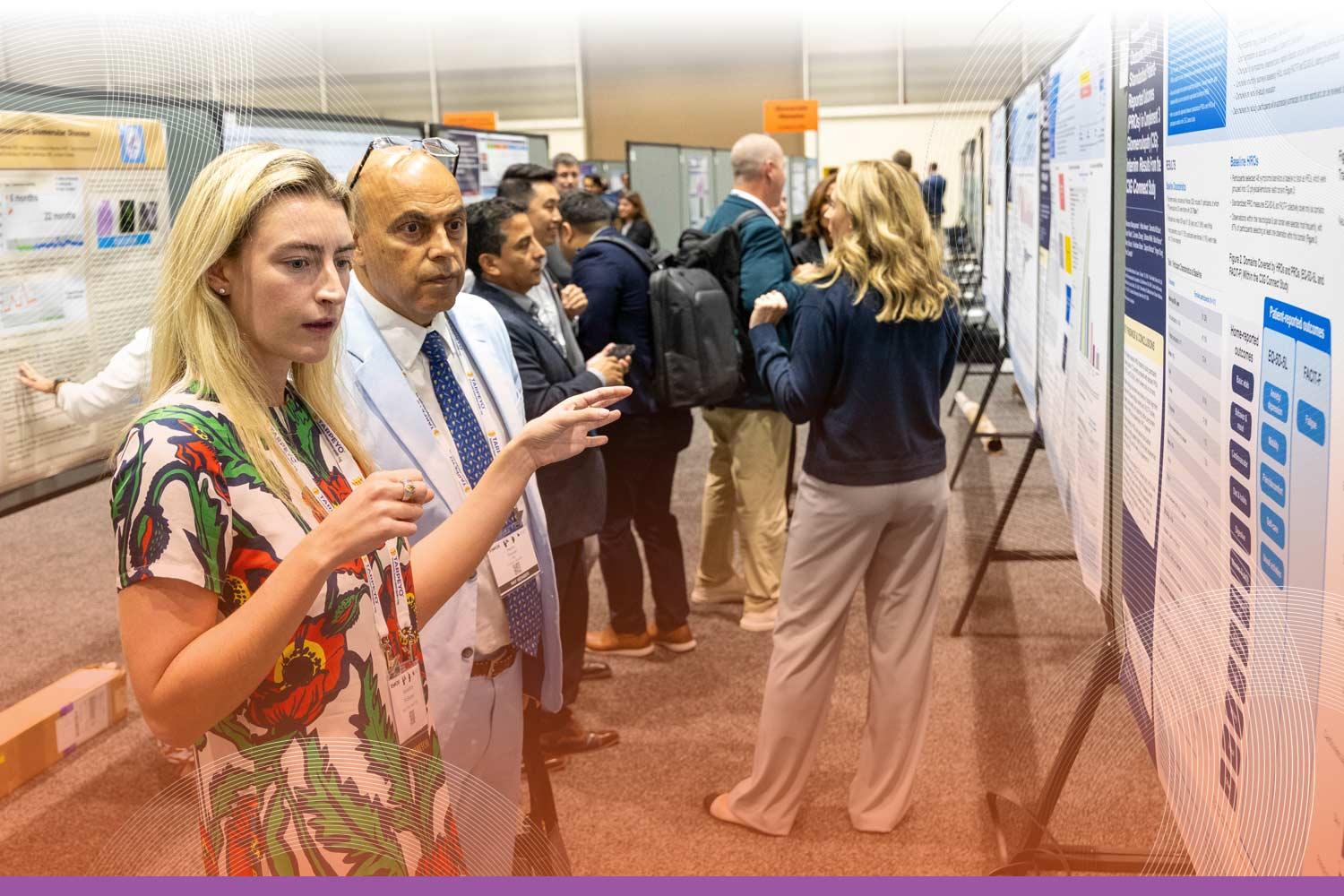
Attendees milling about and reading the abstract posters in the presentation hall
Two female professionals smiling and presenting their research in a Poster Hall

SCM27 Abstract Timeline

Stay tuned for updates!

September 1, 2026
General Abstract Submissions Open

Early December 2026
General Abstract Submissions Close

January 2027
General Abstract Author Notifications
Late-Breaking Abstract Submissions Open

February 2027
Late-Breaking Abstract Submissions Close

Mid-February 2027
Late-Breaking Abstract Author Notifications

Abstract Details & Guidelines

Submission Overview & Key Dates

A CaseHippo/PERC account is required to submit an abstract. Authors working as a group should designate one submitting author to serve as the main point of contact. This individual will be responsible for submitting the abstract, receiving all communications from NKF, and ensuring that updates and information are shared with the full author team.


By submitting an abstract, the submitting author acknowledges that their email address may be shared with members of the media on a case-by-case basis upon request.


Key Dates and Deadlines:

  • General Research Abstracts: 
    • September 1, 2026: General Research Abstract submissions open.
    • December 2, 2026 (by 11:59 PM ET): General Research Abstract submissions close.
  • Late-Breaking Abstracts:
    • January 13, 2027: Late-Breaking Abstract submission period opens.
    • February 3, 2027 (by 11:59 PM ET): Late-Breaking Abstracts submissions close.
  • Notifications: NKF will email notifications to the submitting author in January 2027. It is the responsibility of the submitter to share the notification with the full author team. 
  • Edits and Withdrawals: Requests to revise or withdraw an abstract after the submission deadline must be submitted via email to clinicalmeetings@kidney.org, including all necessary details. All revisions and withdrawals must be received by January 12, 2027.
  • Journal Publication: NKF proudly publishes accepted abstracts as an electronic-only supplement in the April or May issue of the American Journal of Kidney Diseases (AJKD). Nephrology Social Work abstracts will be published in the Journal of Nephrology Social Work (JNSW). An example of the SCM26 abstracts can be found here: https://www.sciencedirect.com/journal/american-journal-of-kidney-diseases/vol/87/issue/5/suppl/S2
  • Physical Posters and e-Posters: Accepted abstracts may choose to display a poster in-person at the NKF 2027 Spring Clinical Meetings in Orlando, FL, upload an e-Poster to our virtual poster gallery, or both. Poster authors who choose to bring a poster to Orlando, FL, are required to register for the conference and are strongly encouraged to attend the SCM27 Poster Author Q&A during the Exhibit Hall Opening Ceremonies on Wednesday, May 12, 2027, from 5:15pm – 7:30pm EST. During this time, poster authors will stand near their posters and engage with attendees. Posters brought onsite must be set up and dismantled according to the schedule provided; any posters left after 11am EST on Friday, May 14, 2027, will be discarded.
  • Poster Showcase Sessions: Invitations to a select group of authors to participate in an oral poster presentation as part of the SCM27 program will be extended in early 2027. The presentations will take place on Wednesday, May 12, 2027, 4:00 – 5:00pm EST.
  • SCM Registration: Accepted authors who choose to bring a poster to Orlando, FL, are required to register for the conference. Registration for SCM27 opens in October 2026, with early-bird pricing available through March 10, 2027.

⭐Looking for the best registration rate?
Become an NKF Professional Member to receive our lowest conference pricing, along with year-round access to valuable educational resources, networking opportunities, and additional member-exclusive benefits. Learn more at https://www.kidney.org/professionals/membership.

Submission Categories

There is no limit to the number of abstracts an individual may submit. However, only one abstract should be submitted per unique study. Submission of multiple abstracts derived from the same study may result in the rejection of one or more submissions.


Abstract may be submitted in the categories below:

  • Acute Kidney Injury/ICU Medicine
  • Case Reports
  • CKD/ESRD – Anemia
  • CKD/ESRD - Cardiovascular Disease
  • CKD/ESRD - Mineral Metabolism and Kidney Stones
  • CKD/ESRD - Prevalence, Progression and Preparation for Dialysis
  • CKD/ESRD - Vascular Access
  • CKD/ESRD – Other
  • Diabetic Nephropathy
  • Education Innovation *NEW in 2027!
  • Electrolyte and Acid Base Abnormalities
  • Glomerular Diseases
  • Health Disparities *NEW in 2026!
  • Health Policy
  • Hereditary Kidney Disease/PKD
  • Home Dialysis - Home Hemodialysis/Peritoneal Dialysis
  • Hypertension
  • Interprofessional Collaboration
  • Late-Breaking (Only results from major clinical trials or epidemiological studies will be considered.)
  • Nutrition
  • Transplantation
  • Other

Submission Guidelines

  • Processing Fee: The $60 processing fee per abstract submission is nonrefundable. The fee must be paid at the time of submission by credit card. Please note your abstract is not submitted until you have completed the payment. Ensure you hit the submit button following successful payment. Abstracts with unpaid or unresolved submission error messages will not be reviewed. 
  • Character Limit: Each abstract is limited to a maximum of 2,500 characters including spaces, title, and author information. Authors may upload a figure in jpeg or png format which will reduce the maximum characters by 400 to 2100 characters. In addition, authors may upload up to 3 supplementary files in pdf, jpeg, mp3 or mp4 format with a max size of 25 MB. Supplementary files will appear online only; they will not be published.
  • Abbreviations & Subtitles: Use of standard abbreviations is desirable, e.g., RBC. Use kg., gm., mg., ml., L, and %. Place a special or unusual abbreviation in parentheses after the full word or phrase the first time it appears. Use numerals to indicate numbers, except to begin sentences. Do not use subtitles, e.g., Methods, Results.
  • Case Reports: Please note that “Case Reports” is its own separate topic. Case Reports submitted should be novel and have a single, well-defined message with meaningful clinical, diagnostic or therapeutic implications adequately supported by the clinical evaluation and diagnostic tests.
  • Abstract Submission: We highly recommend starting your abstract directly in the submission portal to review the requirements, formatting, and required fields before drafting your submission. Abstract submissions are not considered complete until the submission fee has been paid.

The submitting author will be prompted to provide the following information:

  • Details: Select a topic, discipline list relevant keywords, funding sources, and confirm authority of the content.
  • Contributors: Submit the names, emails addresses, affiliations, and institutions for all authors involved. 
  • Introduction: Statement of the purpose of the study, program, project or case report.
  • Methods/Case Summary: Statement of the methods or interventions used.
  • Results/Case Discussion: Summary of the results presented in sufficient detail to support the conclusion.
  • Conclusion: Statement of the implications, conclusions reached or key message.
  • (Optional) Figure: File must be in JPEG or PNG format, less than 2 MB in size. Uploaded image will be included and published with the abstract. 
    NOTE: this will REDUCE 400 characters of the available character limit.
  • (Optional) Acknowledgements: Not published in journals, shown in the SCM portal’s abstract gallery only.
  • (Optional) References: Not published in journals, shown in the SCM portal’s abstract gallery only.
  • (Optional) Supplementary Files: Not published in journals, shown in the SCM portal’s abstract gallery only. You may upload up to 3 image, audio, video and pdf files less than 25 MB.

Eligibility

  • General research and late-breaking abstracts must be electronically submitted through the NKF abstract submission site by their respective deadlines.
  • NKF Professional Membership is not required for abstract submission, authorship, or presentation.
  • Abstracts with unpaid or unresolved submission error messages will not be reviewed. If the submitter does not receive a confirmation email titled “Abstract Submission Confirmation,” please check spam or junk folders first. If it’s still not found, contact clinicalmeetings@kidney.org to verify the status of your abstract submission.
  • Abstracts will not be considered if the research has already been published, presented at another meeting, or shared at a press conference prior to the NKF 2027 Spring Clinical Meetings.
  • The submitting author of an accepted abstract will have the option to bring a poster onsite for SCM27. However, acceptance of an abstract does not waive the registration fee
  • Upon abstract submission, all contributors must agree to the NKF Embargo Policy.

NKF Embargo Policy

In compliance with the Securities and Exchange Commission's Regulation FD (Fair Disclosure), accepted abstracts are made available to the public on the NKF website and are published in AJKD or JNSW (dependent on discipline) in advance of the meeting. Thus, the first release of the abstracts is a public release. Accepted abstracts are embargoed until the time of publication. Please note that abstract content published in AJKD or JNSW is copyrighted. Rights for reproduction or distribution must be requested through the respective journals. Poster content is not formally published within a journal and therefore the rights for reproduction or distribution remain with the author. 

Academic institutions, private organizations, and companies with products whose value may be influenced by information contained in an abstract may issue a press release to coincide with the availability of an abstract. However, the NKF continues to require that information that goes beyond that contained within the abstract, e.g., discussion of the abstract done as part of a scientific presentation, is to be embargoed until the start of SCM27, 8am ET on May 11, 2027. Violation of this policy may result in the abstract being withdrawn from the meeting and other measures deemed appropriate. Journalists failing to abide by the embargo may have their press credentials revoked. 

Copyright Policy

Poster and abstract content submitted to the NKF Spring Clinical Meetings remains the intellectual property of the original authors. Authors are free to reuse their own content, while any third-party requests to reproduce material should be directed to the submitting author for permission.

Declaration of Generative AI in Scientific Writing

The below guidance only refers to the writing process, and not to the use of AI tools to analyse and draw insights from data as part of the research process.


Where authors use generative artificial intelligence (AI) and AI-assisted technologies in the writing process, authors should only use these technologies to improve readability and language. Applying the technology should be done with human oversight and control, and authors should carefully review and edit the result, as AI can generate authoritative-sounding output that can be incorrect, incomplete or biased. AI and AI-assisted technologies should not be listed as an author or co-author, or be cited as an author. Authorship implies responsibilities and tasks that can only be attributed to and performed by humans, as outlined in Elsevier's AI policy for authors.


Authors should disclose in their manuscript the use of AI and AI-assisted technologies in the writing process by following the instructions below. A statement will appear in the published work. Please note that authors are ultimately responsible and accountable for the contents of the work.


Disclosure Instructions

Authors must disclose the use of generative AI and AI-assisted technologies in the writing process by adding a statement at the end of their manuscript in the core manuscript file, before the References list. The statement should be placed in a new section entitled 'Declaration of Generative AI and AI-assisted technologies in the writing process'


Statement: During the preparation of this work the author(s) used [NAME TOOL / SERVICE] in order to [REASON]. After using this tool/service, the author(s) reviewed and edited the content as needed and take(s) full responsibility for the content of the publication


This declaration does not apply to the use of basic tools for checking grammar, spelling, references etc. If there is nothing to disclose, there is no need to add a statement.

Journal Publication & Abstract e-Gallery

Abstract Publication in AJKD

NKF proudly publishes the majority of abstracts as an electronic-only supplement in the April or May issue of the American Journal of Kidney Diseases (AJKD).

Abstract Publication in JNSW

Nephrology Social Work abstracts will publish in the spring issue of the Journal of Nephrology Social Work (JNSW).

Abstract Publication in the SCM26 Portal Gallery

All accepted abstracts are available in the SCM26 Portal's Abstract Gallery, including those who chose to submit an e-Poster for virtual display. Explore the SCM26 abstracts by category, author, institution, city, or country using the link below!

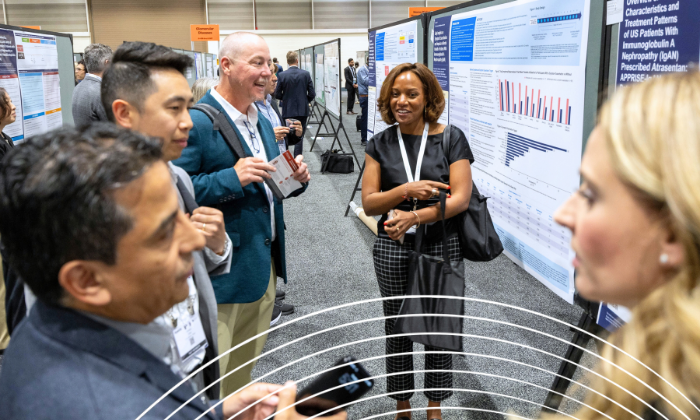
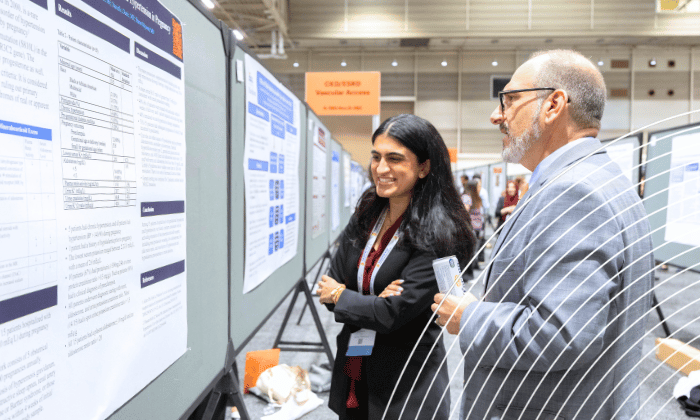
two professionals looking at an abstract poster
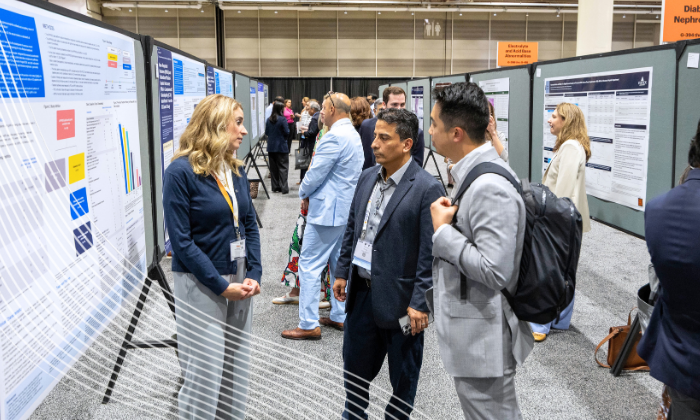
Crowd of people mingling in a row of abstract posters
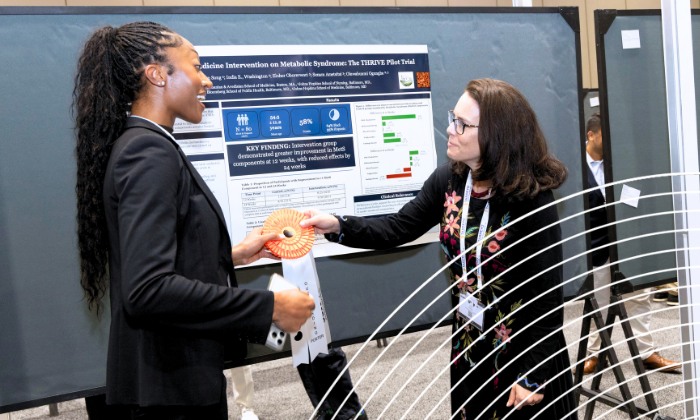
Applauding an award winning poster

Previous Abstracts

Abstracts are presented on posters, highlighting critical issues such as acute kidney injury, ICU medicine,
transplantation, hemodialysis, diabetes, and hypertension, among many other topics.

Abstracts Archive

Icon of raised hand with question mark

Have any lingering questions?

Check out our Frequently Asked Questions.