Last updated: November 09, 2026
Polycystic kidney disease (PKD) causes fluid-filled sacs called cysts to grow in the kidneys. Learn about symptoms, testing, treatment, and living with PKD.
About Polycystic Kidney Disease
Polycystic kidney disease (PKD) is a condition in which many fluid-filled sacs, called cysts, grow in the kidneys. Over time, the cysts can make the kidneys larger and may damage them. This can make it harder for the kidneys to clean the blood.
PKD affects people of all backgrounds. Some people have no symptoms for many years. Others may develop high blood pressure, pain, or problems with kidney function. Not everyone with PKD develops kidney failure.
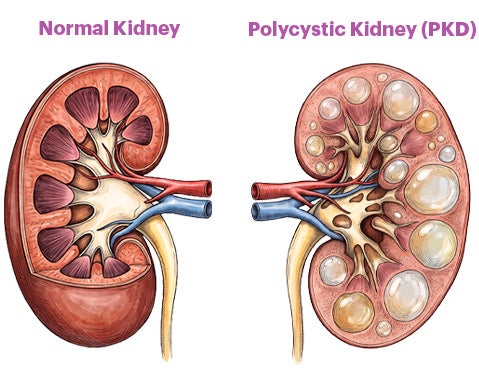
PKD can change kidney size and function over time, but symptoms and the pace of change differ from person to person.
Signs and Symptoms
Many people with PKD feel well for years. Symptoms may start in adulthood, but PKD can also affect children. A doctor may find PKD during testing for another reason.
Signs and symptoms may include:
- High blood pressure
- Pain in the back or side
- Blood in the urine (pee)
- A swollen or larger belly
- Repeated urinary tract or kidney infections
- Kidney stones
High blood pressure may not cause symptoms. Regular blood pressure checks can help find it early.
Causes
Most people with PKD have an inherited form of the condition. Inherited means that a change in a gene can be passed from a parent to a child. Genes are instructions in the body that help it grow and work.
PKD can be passed down in different ways
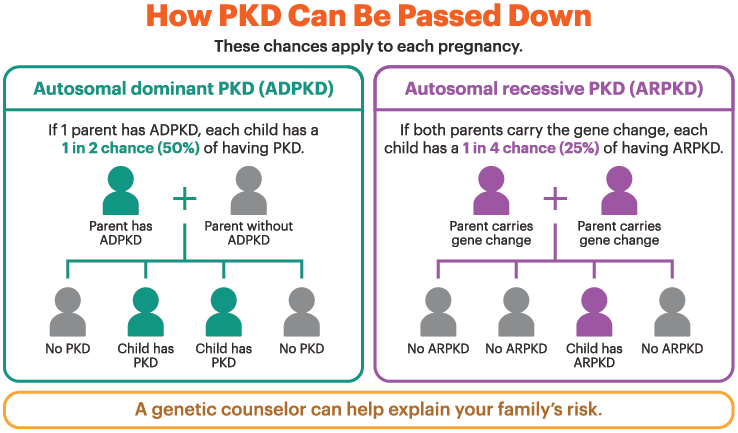
Autosomal dominant PKD (ADPKD) is the most common inherited type. If a parent has ADPKD due to a disease-causing gene change, each child has a 1 in 2 (50%) chance of inheriting that change. This chance is the same for each pregnancy.
Autosomal recessive PKD (ARPKD) is a rare inherited type. When both parents carry a disease-causing change in the same related gene, each child has a 1 in 4 (25%) chance of having ARPKD in each pregnancy.
Sometimes a person has ADPKD even when no one else in the family is known to have it. A genetic counselor can help explain family risk and testing options.
Types
Autosomal dominant PKD (ADPKD)
ADPKD is the most common type of PKD. Cysts often grow over many years. Some people do not notice symptoms until adulthood, while others develop symptoms earlier. Changes in the PKD1 or PKD2 genes are common causes.
Autosomal recessive PKD (ARPKD)
ARPKD is much less common. It often begins before birth or in childhood and can affect both the kidneys and liver. The condition can be serious, but symptoms and outcomes vary. Children with ARPKD need care from specialists.
Acquired cystic kidney disease is different from inherited PKD
Acquired cystic kidney disease (ACKD) can develop in people who have had advanced kidney disease for a long time, especially people on dialysis. ACKD is not usually inherited and is not the same condition as ADPKD or ARPKD.
Complications
PKD can affect more than the kidneys. Your care team can check for problems and help you manage them.
Kidney problems
• High blood pressure
• Kidney infections or kidney stones
• Pain or bleeding from cysts
• A gradual loss of kidney function, sometimes leading to kidney failure
Kidney failure means the kidneys can no longer do enough work to keep the body healthy. People who develop kidney failure may need dialysis or a kidney transplant. Not everyone with PKD reaches this stage.
Problems outside the kidneys
Some people with ADPKD develop cysts in the liver. Others may have changes in the heart valves or a weakened blood vessel in the brain, called an aneurysm. Not everyone needs screening for a brain aneurysm. Ask your doctor whether your personal or family history makes screening important.
Pregnancy and family planning
Many people with PKD have healthy pregnancies. The risk of certain problems may be higher if kidney function is low or blood pressure is high. If you are planning a pregnancy, talk with your kidney doctor and pregnancy care team early. Genetic counseling may help if you have questions about passing PKD to a child.
Polycystic Kidney Disease
Looking for more info about PKD?
Join our PKD kidney community for valuable tips and resources to support your PKD journey.
Tests
- Ultrasound uses sound waves to make pictures of the kidneys and look for cysts.
- MRI or CT scan may show cysts more clearly or help measure kidney size.
- Blood tests, including estimated glomerular filtration rate (eGFR), show how well the kidneys clean the blood.
- Urine tests look for blood or protein in the urine.
- Genetic testing may help confirm a diagnosis or guide family planning when the result would help with a care decision.
An eGFR is a number based on a blood test. In general, a lower eGFR means the kidneys are filtering less well. Your doctor will explain what your results mean for you. A single scan or test result may not tell the full story.
Ask what your blood pressure, eGFR, and imaging tests show about your kidney health.
Treatment
Overview
There is no cure for inherited PKD at this time. Treatment can help manage symptoms, protect kidney health, and, for some people with ADPKD, slow the loss of kidney function. Your treatment plan will depend on your type of PKD, symptoms, kidney function, and other health needs.
Your care plan may include:
- Keeping blood pressure in a healthy range
- Treating urinary tract or kidney infections quickly
- Managing pain with medicines that are safe for your kidneys
- Checking kidney function and kidney size over time
- Planning early for dialysis or transplant if kidney failure becomes likely
Medications
Medicines can help lower high blood pressure and treat infections or pain. Some pain medicines sold without a prescription can harm the kidneys. Ask your doctor or pharmacist before taking them.
Tolvaptan is a medicine that may slow kidney function loss in certain adults with ADPKD who are at risk for faster disease progression. It does not cure PKD. It can cause frequent urination and thirst, and it can cause serious liver injury. People taking it need regular blood tests to check their liver. Ask your kidney doctor whether it is an option for you.
Nutrition and fluids
There is no one diet that fits everyone with PKD. Food and fluid needs can change as kidney function changes. A kidney dietitian can help you make a plan based on your needs, food preferences, cultural traditions, and budget.
Your care team may recommend that you:
- Choose foods with less sodium (salt) to help manage blood pressure.
- Eat balanced meals with foods you enjoy and can access.
- Ask how much water is right for you. Do not force yourself to drink large amounts without guidance.
- Ask whether you need to change your intake of protein, potassium, or phosphorus based on your test results.
There is not enough evidence to say that avoiding all caffeine will stop PKD cysts from growing. Talk with your doctor about caffeine and drinks that work for your health needs.
Exercise and daily life
Physical activity can support heart and kidney health. Walking, swimming, and other activities you enjoy may be good options. Talk with your doctor about sports with a risk of injury to the kidneys, especially if your kidneys are enlarged. Avoid becoming dehydrated during activity.
If you smoke, ask about support to quit. You can also ask for help managing stress, work, transportation, medicine costs, or finding specialty care.

Preparing for your appointment
If you have PKD or a family history of PKD, ask your primary care doctor whether you should see a kidney doctor (nephrologist). You can bring a family member or trusted person, if you wish. Bring your medicines, recent test results, and questions.
Questions to ask
- What type of PKD do I have?
- What do my kidney tests and scans mean?
- How often should I check my blood pressure and kidney function?
- Is tolvaptan or another treatment right for me?
- How much water should I drink each day?
- Should I meet with a kidney dietitian or genetic counselor?
- Do I need screening for a brain aneurysm?
- What should I do if I have new pain, fever, or blood in my urine?
- Are there clinical trials I could consider?
Kidney Health Resources
For more information, explore NKF resources on chronic kidney disease, genetic testing, blood pressure, kidney-friendly eating, and treatment options.
- Your Genes, Your Family, and Kidney Health
- Know Your Kidney Numbers: Two Simple Tests
- Simple Kidney Cysts
More education and information from NKF
Connect with NKF for answers, support, and free learning programs.
- NKF C3G Online Community
- NKF Cares: Patient Information Help Line
- NKF Kidney Learning Center
- NKF Transplants for All
- Find a Kidney Dietitian
Resources for healthcare professionals
Explore education, clinical tools, and practical resources to support kidney care and help you stay current in your practice.