Last updated: August 24, 2026
Medically reviewed by: NKF Patient Education Team
Chronic kidney disease, also called CKD, means the kidneys have been damaged over time and do not work as well as they should. CKD often has no symptoms in the early stages.
About Chronic Kidney Disease
Chronic kidney disease (CKD) means your kidneys have been damaged over time and do not work as well as they should. CKD usually develops slowly. Many people do not have symptoms in the early stages.
Your kidneys do many important jobs. They help:
- Remove natural waste products and extra water from your body
- Help make red blood cells
- Balance important minerals in your body
- Help maintain your blood pressure
- Keep your bones healthy
CKD means your kidneys have been damaged or not working well for at least 3 months. CKD can also increase the risk of other health problems, including heart disease and stroke. CKD is divided into stages to help guide testing, treatment, and follow-up care.

Signs and Symptoms
Many people living with CKD do not have any symptoms until the more advanced stages or until complications develop. If symptoms happen, they may include:
- Foamy urine also called pee
- Peeing more often or less often than usual
- Itchy or dry skin
- Feeling tired
- Nausea
- Loss of appetite
- Weight loss without trying to lose weight
People with more advanced CKD may also notice:
- Trouble concentrating
- Numbness or swelling in the arms, legs, ankles, or feet
- Achy muscles or cramping
- Shortness of breath
- Vomiting
- Trouble sleeping
Symptoms alone cannot tell you if you have CKD. The only way to know is to get tested.

Causes
Anyone can develop CKD at any age. Some people have a higher risk because of other health conditions, family history, age, or a past kidney injury. For many people, CKD is not caused by only one thing. It may be linked to health, lifestyle, environment, and access to care.
Common risk factors for CKD
- Diabetes
- High blood pressure, also called hypertension
- Heart disease or heart failure
- Obesity
- Age over 60
- Family history of CKD or Kidney failure
- Personal history of acute kidney injury, also called AKI
- Smoking or use of tobacco products
- Heavy Alcohol use
Other causes of CKD
CKD can also be caused by other conditions or circumstances. Examples include:
- Glomerular (glow-MAIR-yoo-ler) diseases, such as glomerulonephritis (glow-MAIR-yoo-low-ne-FRY-tis), and IgA nephropathy.
- Genetic or Inherited conditions, such as polycystic kidney disease
- Autoimmune diseases, such as lupus nephritis, can also cause CKD. Lupus nephritis, (LOO-pus ne-FRY-tis), happens when lupus damages the kidneys.
- Autoimmune means the body’s defense system attacks healthy parts of the body by mistake.
- Severe infections, such as sepsis and hemolytic uremic syndrome, also called HUS
- Kidney cancer
- Kidney stones
- Long-lasting urinary tract infections
- Hydronephrosis
How doctors describe CKD
Doctors describe CKD in different ways. This helps them understand your kidney health, choose the right care plan, and decide how often you need follow-up care.
CKD stage
CKD is divided into stages 1 through 5. Stages are based mostly on your estimated glomerular filtration rate, also called eGFR. Your CKD stage helps guide treatment decisions, how often you need testing, and when you may need to see a kidney doctor.
Albumin in the urine
Albumin is a protein that should usually stay in the blood. Albumin in the urine can be a sign of kidney damage. The urine albumin-creatinine ratio, also called uACR, helps show whether there is albumin in the urine and how high the level is.
Cause of CKD
Some people have CKD caused by diabetes, high blood pressure, glomerular disease, genetic conditions, autoimmune disease, or other health problems. Knowing the likely cause can help guide treatment.
Complications of CKD
As CKD worsens, the risk of complications can go up. Complications may include:
- Heart disease or stroke
- High blood pressure
- Anemia, or low levels of red blood cells
- Metabolic acidosis, Metabolic acidosis, which means acid builds up in the blood
- Mineral and bone disorder, when calcium and phosphorus levels are out of balance and may affect the bones or heart
- Hyperkalemia, Hyperkalemia, which means high potassium levels in the blood
- Kidney failure
Some conditions, such as heart disease and high blood pressure, can also cause CKD or make CKD worse.

Diagnosis
Doctors diagnose CKD using blood and urine tests. These tests help show how well your kidneys are working and whether there is kidney damage.
Tests
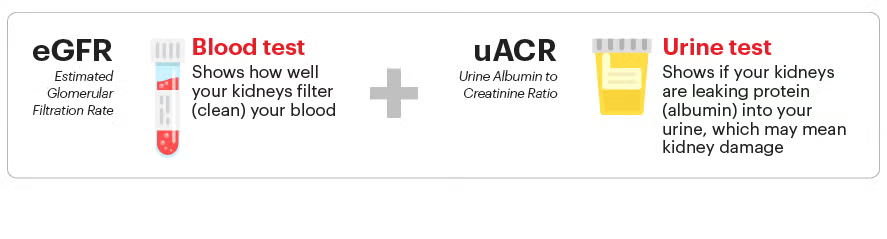
Checking for CKD usually starts with two tests:
- A blood test called estimated glomerular filtration rate, or eGFR
- A urine test called urine albumin-creatinine ratio, or uACR
Both tests are needed to get a clear picture of your kidney health. An eGFR under 60 and/or a uACR over 30 for 3 months or more may be a sign of CKD.
eGFR blood test
The eGFR is an estimate of how well your kidneys are removing waste from the blood. It is calculated using a blood test result, using your age, and your sex. A higher eGFR number is usually better. Your eGFR helps determine your CKD stage.
uACR urine test
The uACR measures albumin and creatinine in your urine. Healthy kidneys keep albumin in the blood while filtering creatinine into the urine. A lower uACR number is usually better. A higher uACR can be a sign of kidney damage and a higher risk for complications.
Other tests
In some cases, your doctor may order other tests to learn more about your kidney health. These may include imaging tests, such as an ultrasound, CT scan, or MRI, or a kidney biopsy.

Treatment for CKD
Treatment for CKD depends on your CKD stage, test results, and other health conditions. Treatment usually focuses on four goals:
- Managing the condition that is most likely causing CKD, such as diabetes, high blood pressure, or IgA nephropathy
- Taking steps to slow CKD progression
- Lowering the risk of heart disease and stroke
- Treating complications caused by CKD
No two people are the same. Talk with your doctor about the treatment plan that is right for you.
Medications
Your doctor may prescribe one or more medicines to help slow CKD progression, protect your kidneys, lower blood pressure, lower urine albumin, or reduce your risk of heart disease and stroke. These may include medicines called ACE inhibitor or ARB, an SGLT2 inhibitor, an nsMRA, or a statin, depending on your health needs.
You may also need medicines or supplements to manage CKD complications, such as anemia, mineral and bone disorder, metabolic acidosis, or high potassium.
Some pain medicines can be harmful to the kidneys, especially non-steroidal anti-inflammatory drugs, also called NSAIDs.
Ask your doctor what each medicine is for and how it helps protect your kidneys, heart, or blood vessels.
Nutrition
Eating well can help support kidney health and overall health. Your nutrition needs may change based on your CKD stage, blood pressure, diabetes status, lab results, and whether you have complications.
Your doctor or kidney dietitian can help you build a kidney-friendly plate that supports your needs. They can help you understand if you need to limit sodium, potassium, phosphorus, calcium, or protein.
They may also recommend that you:
- Use the Nutrition Facts label to compare foods
- Choose foods that fit your culture, budget, and health needs
- Work with a kidney dietitian, especially if you also have diabetes, high blood pressure, heart failure, or other health conditions
Exercise
Regular physical activity and exercise can support kidney health, heart health, blood pressure, weight, sleep, and emotional wellbeing. If you are not active now, start slowly. Short walks can be a good way to begin.
Ask your doctor what types of activity are safe for you, especially if you have heart disease, trouble breathing, swelling, balance concerns, or other health problems.
Clinical trials looking for participants
The individual listings below feature opportunities from partners who have requested the National Kidney Foundation to help bring these research opportunities to you. Other opportunities to participate in clinical research may exist. Ask your doctor about clinical trials happening in your area.
Recommended clinical trial and research participation placements:
Check out our online communities to connect, learn more and hear from others going through similar experiences.
Preparing for your appointment
Questions to ask
Bring your recent lab results, a list of medicines and supplements, and any questions you want to ask. It may help to write down your eGFR, uACR, blood pressure, and A1C if you have diabetes or prediabetes.
- What are my eGFR and uACR numbers?
- What is my CKD stage?
- What is the likely cause of my CKD?
- Has my kidney function changed over time?
- How often should I have my eGFR and uACR checked?
- Should I take any medicines to help lower my risk of CKD getting worse?
- Are any of my medicines, supplements, or over-the-counter medicines unsafe for my kidneys?
- Should I make any changes to what I eat or drink?
- Should I see a kidney doctor?
- What symptoms should I call about?
Kidney health information, support, and professional resources
Explore more information and resources about kidney health.
Learn more about kidney health
- Stages of CKD
- Kidney Numbers and the CKD Heat Map
- Albuminuria/Proteinuria
- Tests to Check Your Kidney Health
- Newly Diagnosed with CKD
Living well with CKD
- NKF Nutrition Hub
- Creating a Kidney-Friendly Plate
- Exercise and Kidney Disease
- Medicines and Kidney Health
More education and information from NKF
Connect with NKF for answers, support, and free learning programs.
- NKF Cares: Patient Information Help Line
- NKF Kidney Learning Center
- NKF Transplants for All
- Find a Kidney Dietitian
Resources for healthcare professionals
Explore education, clinical tools, and practical resources to support kidney care and help you stay current in your practice.