April 07, 2026
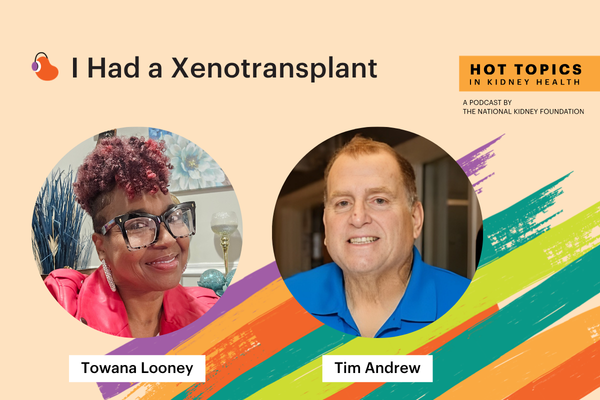
When traditional transplants weren’t possible, these brave people chose xenotransplantation and helped shape the future of kidney care.
A Rare Moment in Transplant History
As of February 2026, only a handful of living people in the United States have received a xenotransplanted kidney or a pig kidney transplant. This Donate Life Month, two of these pioneers, Towana Loony and Tim Andrew, share in their own words what it means to be part of medical history.
Why Towana Needed a Xenotransplant

Towana donated a kidney to her mother in 2000. While Towana was a healthy donor, she developed preeclampsia, or dangerously high blood pressure, two years later during pregnancy.
“The kidney damage was found in 2005. I managed it for eleven years before starting dialysis in 2016,” Towana said. “I got on the transplant wait list soon after.”
But Towana later found out she’d never receive a human-to-human (allotransplantation) transplant.
“I have antibodies that will immediately cause a kidney transplant to be rejected,” she said. “A couple of years later, I tried an exploratory drug to lower those antibodies.”
Towana took the drug for a year. Unfortunately, it didn’t work.
“A year later, my team at NYU Langone Transplant Institute introduced me to xenotransplantation using a pig kidney,” Towana said. “I immediately agreed and wanted to rush through the process, but there were many guidelines to follow.”
Why Tim Needed a Xenotransplant
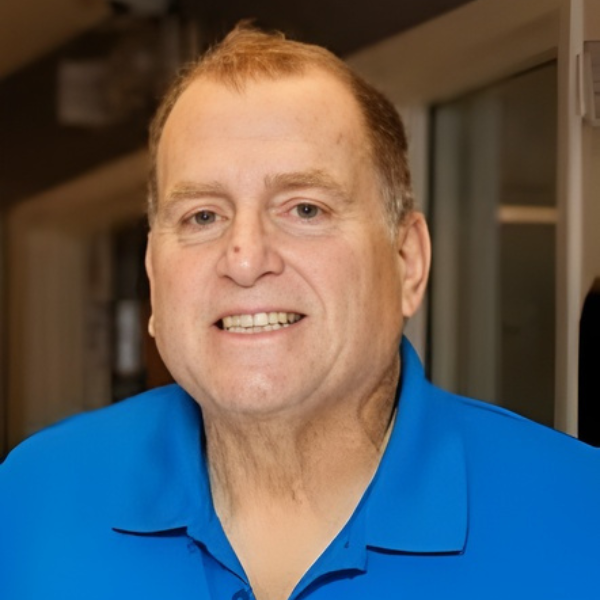
Tim’s journey started with fatigue.
“I went to the doctor to see if anything was wrong and was diagnosed with stage three kidney disease,” he said. “They said many people manage and stay at stage three for a long time.”
But Tim’s kidneys failed just a month later.
“That’s when I started dialysis,” he said. “Dialysis can be hard on the heart, though. I had a heart attack six months later. I knew a transplant was my best chance.”
Tim got on the transplant waitlist but learned the wait could take seven years due to his blood type. His life expectancy on dialysis was only five years.
“I got violently sick. My health started declining quickly,” Tim said. “I decided to look for other options.”
Tim got lucky when he found that Massachusetts General Hospital was looking for potential xenotransplant recipients under the compassionate use, or expanded access pathway. Compassionate use allows some people who fit a program’s criteria and are critically ill with no other treatment options to try drugs or treatments not yet approved by the FDA.
“I knew my time was limited, and I didn’t want to fade away. I’d rather go out in a blaze of glory, doing something that makes the lives of everyone coming after me better,” Tim said. “I’m glad U-Mass agreed to my participation.”
Handling Risks and Questions
Researchers had an idea of how the xenotransplanted kidney should work, but there are still many unanswered questions. So, neither Tim nor Towana’s team could predict what would happen after surgery.
“We spent hours discussing the possible negatives,” Tim said.
When presented with the known and unknown risks, he was willing to take even the greatest of risks.
“I told them that I was okay dying as long as they learned something new.”
One of the hardest aspects wasn’t how Tim or Towana felt about the risks; it was how their families reacted.
“I’m from the South. My family, my church family, and the pastors were not happy with my decision,” Towana said. “They didn’t believe in using animal organs in humans. I argued that they eat meat. How is this so different?”
But Towana didn’t let that stop her from doing what she felt was right.
“I came to them for encouragement. While I respect their opinion, my mind was made up,” she said. “I wasn’t getting the xenotransplant just for myself. Helping my family, my race, and all of mankind is my mission.”
Tim’s family had similar reactions.
“They thought I was nuts because of all the unknowns,” he said. “They also brought up religion. I’m Catholic, so I went to the Bishop of New Hampshire and asked the Church’s opinion on it.”
The Bishop sent Tim a long document which, “essentially stated that animals were put on Earth by God to serve man.”
With that, the last of Tim’s reservations faded. He was ready for surgery.
Join the NKF Blog Newsletter
Get Support, Delivered Monthly
Get monthly inspirational stories, practical insights, and expert advice to manage your kidney health at any stage.
Pig Kidney Transplantation Recovery and Rejection
Tim had a few bumps in the road during his xenotransplant surgery recovery.
“My xenotransplant took place on January 25th, 2025,” he said. “It wasn’t smooth sailing. The medications took a toll on me, but it was worth it.”
Tim’s pig kidney, which he named Wilma, lasted 271 days.
“The doctors had tears in their eyes when they told me Wilma rejected,” Tim said. “I said, ‘You don’t have to cry. Be proud of what you did.” They didn’t reach the moon when the first rocket launched. It took more attempts, more people, more work. That’s what this is.”
Towana’s recovery after xenotransplant was much easier.
“I had my xenotransplant on November 25th, 2024,” she said. “When I woke up, I could feel my blood flowing and my heartbeat in my lips. It was like getting a second chance in life. It was amazing to feel that good and have that much energy.”
Towana’s xenotransplant lasted 4 months and 9 days before rejection.
“Going back to dialysis was not easy. I’m not going to sugarcoat it,” Towana said. “Right now, dialysis is my best friend. It’s gotten better. And for anyone listening—it will get better.”
While both transplants eventually rejected, doctors still consider these major scientific milestones.
Need support on your kidney disease journey? Get matched with a trained NKF Peer mentor with experience living well with kidney disease.
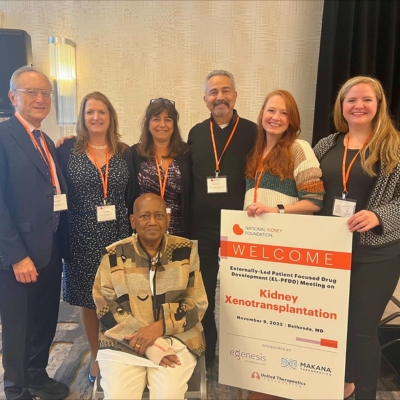
“Xenotransplant isn’t a one-size-fits-all solution,” Towana said. “Try to stay hopeful. Just because it didn’t work for me doesn’t mean it won’t help someone else.”
Towana uses this positive outlook now that she’s back on dialysis.
“I talk to and share resources with new patients who are feeling overwhelmed,” she said. “It means a lot to me to help them relax and get over their nerves.”
Tim’s advice is simple: “Stay strong. Stay ready. Because you’re going to get a chance—be ready for it.”
Both say education and openness are key, especially in communities that have historically faced barriers to care.
“Talk to your doctor about emerging treatments,” Towana said. “Be open. Don’t be afraid. We’ve got to get a breakthrough for all mankind.”
As research continues, both Tim and Towana remain committed to sharing their experiences so others feel informed and supported.