August 03, 2026
Article By: NKF Staff
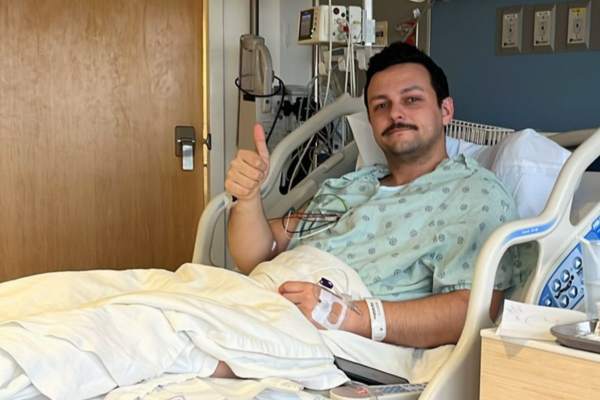
When David donated his kidney in January 2024, he wasn’t trying to save someone he knew. He donated to a stranger.
More than two years later, David says he feels healthy, grateful, and proud of his decision. Now, he’s sharing his story to help others learn more about living kidney donation and the impact one donor can have.
What Is an Altruistic Kidney Donor?
An altruistic kidney donor, also called a non-directed donor, is someone who donates a kidney to a person they do not know.
David first learned about the idea years before he decided to take action.
“I had read articles and listened to podcasts about altruistic kidney donors,” David said. “The idea that if you donate a kidney freely, it can help set off donor chains stuck with me over the years.”
A donor chain happens when a willing donor is not a match for their intended recipient. An altruistic donor can begin a chain by donating to one recipient, allowing that recipient’s loved one to donate to another patient. In some cases, one donation can help multiple people receive lifesaving kidney transplants.
Join the NKF Blog Newsletter
Get Support, Delivered Monthly
Get monthly inspirational stories, practical insights, and expert advice to manage your kidney health at any stage.
Deciding to Donate a Kidney
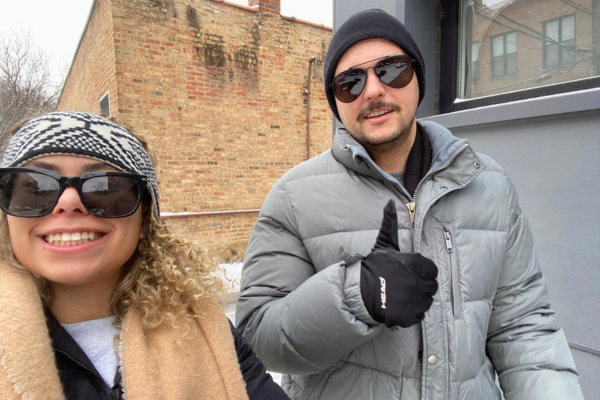
In early 2023, David decided it was finally time to begin the living kidney donor evaluation process.
“I had a stable job and a supportive family,” he said. “I knew it was time.”
He used NKF’s transplant center resources to learn more about donation, signed up through NKF’s partnership with the National Kidney Registry (NKR), and was connected with a transplant team at Rush University Medical Center in Chicago.
“The evaluation was thorough,” David said. “It was nearly a year of testing and conversations before I was deemed a good candidate and matched with a recipient in late 2023.”
Telling family and friends that he planned to donate a kidney to someone he had never met brought plenty of questions at first. But over time, those conversations became easier.
“A lot of it was walking people through the risks and explaining that while surgery always has risks, they were very low in living donation,” he said. “I believed it was going to do a lot more good than harm.”
His girlfriend, while understandably nervous, supported him throughout the process and agreed to help during recovery.
As surgery approached, David said the transplant team made sure he never felt pressured to move forward.
“They made sure, even up to the morning, that it was okay to change my mind,” David said. “The advocate was very reassuring and was on my side the entire time.”
Kidney Donation Surgery and Recovery
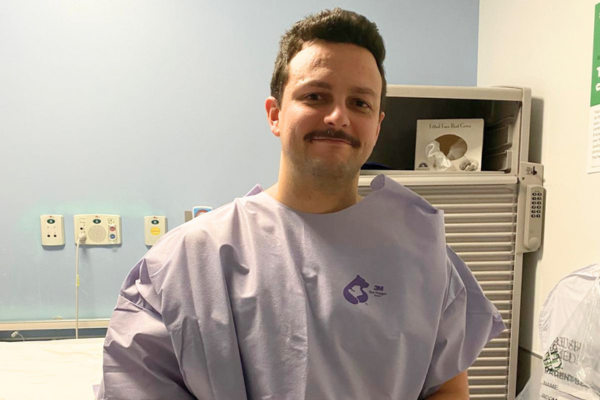
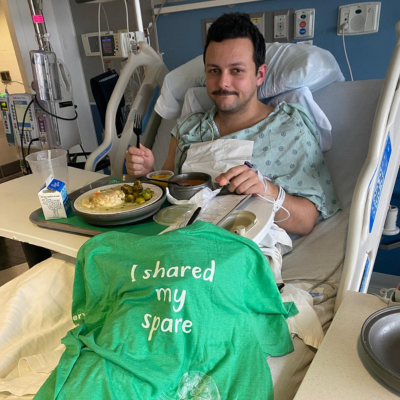
David’s surgery was scheduled for January 2024.
“There’s something surreal about knowing you’re going to wake up and something is going to be gone,” David said. “But I never doubted my decision.”
After surgery, he expected recovery to be difficult. Instead, David was surprised by how quickly he bounced back.
“I live in a fourth-floor walk-up apartment,” David said. “I was able to climb the stairs myself after I was discharged.”
Within a week, he was working remotely. Two weeks later, he returned to work in person. About six weeks after surgery, he was back to playing volleyball and other regular physical activities.
“I wasn’t expecting recovery to be this quick and easy,” David said. “If not for seeing the scars fade, I wouldn’t know anything was taken from my body.”
Today, he says very little about his daily life has changed.
“The only things that are really different are that I drink more water. I’m also more careful with over-the-counter pain medications,” he said. “Otherwise, my lifestyle hasn’t changed.”
How One Kidney Donation Helped Multiple People
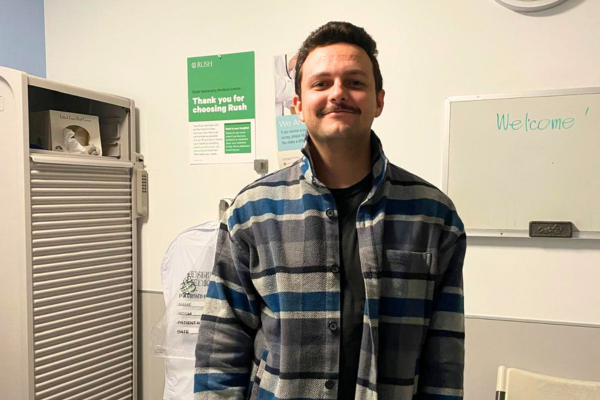
Because David donated altruistically, he chose not to contact his recipient.
“I didn’t want anyone to feel like they owed me a thank you,” he said. “That wasn’t the point of this.”
But he was happy to hear the transplant was successful.
“I know there was at least one chain,” David said. “The person connected to my recipient donated to someone else after that. It’s incredibly rewarding to know you contributed to something like that.”
Considering living kidney donation? Connect with a trained living donor Peer Mentor to learn more.
Sharing His Living Kidney Donor Story
About a year after donating, David learned about the "LIVING DONOR!" PSA, a public service campaign looking for living kidney donors willing to share their stories.
“I had never done anything like that before,” he said. “I’d never been on camera or done a commercial.”
Encouraged by his girlfriend and family, David submitted an audition tape explaining why he chose to become a living kidney donor.
After several rounds of auditions, he was selected for the campaign and traveled to Los Angeles to film the PSA.
“The whole team was incredible,” he said. “And it mattered knowing the people involved personally understood why this issue is important. Melissa, the director, has kidney disease herself.”
For David, participating in the campaign became another way to help normalize living donation and encourage others to learn more.
The Lasting Impact of Living Donation
Since donating, David says he has become much more aware of how many families are affected by kidney disease.
“I’ve learned how many people in my life have family members who went through kidney disease or transplant,” he said. “While I can’t fully understand that experience, it gave me a deeper appreciation for the challenges people face while waiting for a kidney.”
Most of all, he says the experience left him with a strong sense of purpose.
“It’s hard to articulate the feeling of contributing to something meaningful,” David said. “You know there’s such a huge need for organ donors, and being able to say you helped—even one person—means a lot.”
For anyone considering living kidney donation, David understands the process can feel intimidating. But he hopes his story helps reassure others that donation is possible.
“I think it’s easier than people imagine,” he said. “If sharing my experience helps someone consider donating, then it’s worth it.”
Ready to take the next step? Get started with information on how to connect with a transplant center.