July 16, 2026
Article By: Jesse Roach, MD, NKF’s Senior Vice President of Government Relations
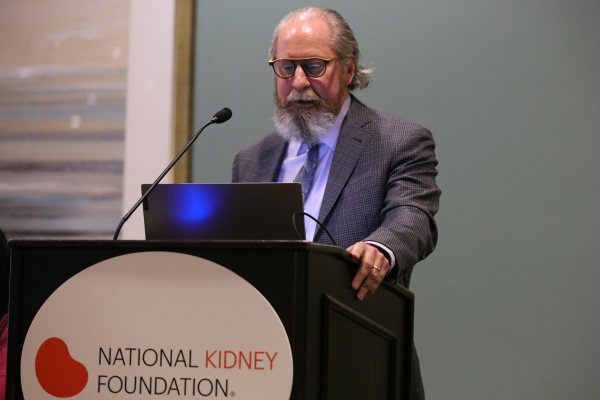
Dr. Robert Montgomery, Director of the NYU Langone Transplant Institute, presenting at the 2024 Spring Clinical Meetings Xenotransplant Session.
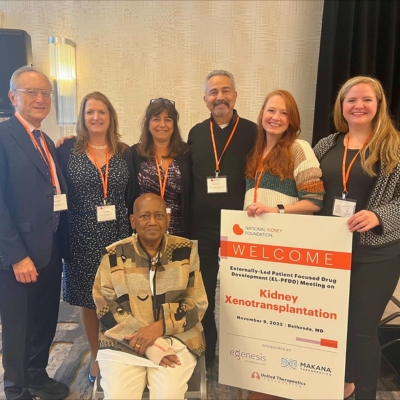
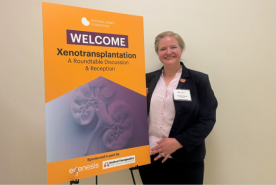
The Second Annual Richard Slayman Clinical Xenotransplantation Workshop is a groundbreaking kidney transplant meeting that brought together experts to discuss the future of xenotransplantation, including the National Kidney Foundation's own Heather Murphy, who represented the patient perspective.
Key Takeaways
Key Takeaways
Kidney xenotransplantation utilizes genetically modified pig kidneys. The treatment is in clinical trials.
The Richard Slayman Workshop brought together leading transplant experts, regulators, and patients to discuss the future of kidney xenotransplantation.
NKF elevated patient voices through a patient and family panel and its xenotransplantation support community.
What is Xenotransplantation?
Xenotransplantation is the process of transplanting organs, tissues, or cells from animals into humans. Recent advances in genetic engineering have helped scientists study whether organs from specially modified pigs could one day become a new source of organs for people who need transplants.
Why Xenotransplantation?
More than 100,000 people in the United States are waiting for a kidney transplant. For many, receiving a kidney from a donor could mean more time with family, fewer health challenges, and a better quality of life.
But the need for kidneys far exceeds the number of available donor organs. That shortage is why researchers are exploring new approaches, including xenotransplantation.
The 2nd Richard Slayman Clinical Xenotransplantation Workshop
Co-chaired by Dr. Robert Montgomery, the 2nd Richard Slayman Clinical Xenotransplantation Workshop, named in honor of Richard Slayman—the first person to receive a clinical kidney xenotransplant—brought the world's leading transplant experts to NYU Langone Health.
Doctors, scientists, surgeons, and leaders from the FDA and NIH shared their latest research and clinical experiences, while also keeping the patient at the center of every discussion.
How NKF Put Patients at the Center
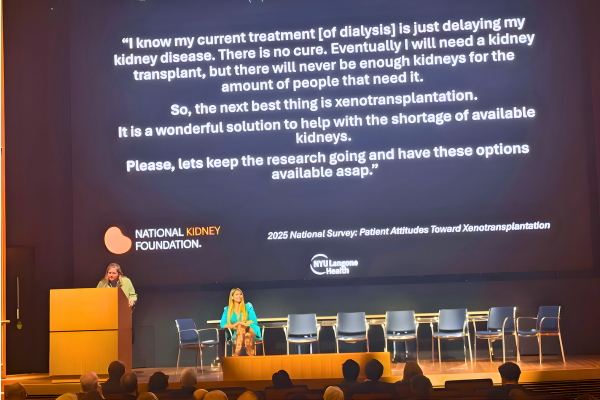
While much of the workshop focused on science and research, one message was clear: the future of xenotransplantation must include the voices of patients.
One of the most powerful moments of the weekend was a patient and family panel organized and led by NKF's Heather Murphy. She did an outstanding job bringing patient voices to the center of a room full of scientists and policymakers.
The panel was a powerful reminder of who this work is truly for–the people affected by kidney disease, including this anonymous participant in NKF's 2025 National Survey: Patient Attitudes Toward Xenotransplantation.
"I know my current treatment (dialysis) is just delaying my kidney disease. There is no cure," they said. "Eventually, I will need a kidney transplant, but there will never be enough kidneys for the number of people who need them. So the next best thing is xenotransplantation. It is a wonderful solution to help with the shortage of available kidneys. Please keep the research going and have these options ASAP."
NKF's xenotransplantation support group was also recognized at the meeting, a meaningful acknowledgment of the community NKF has helped build.
Answering Important Questions
The workshop included participation from leaders across the transplant community, including representatives from the U.S. Food and Drug Administration (FDA) and the National Institutes of Health (NIH).
Experts discussed both the promise and the challenges of xenotransplantation. While early research has shown encouraging progress, xenotransplantation remains in the clinical trial stage. Many questions still need to be answered before this could become a widely available treatment option.
Researchers continue to study important areas such as:
- How long can xenotransplanted organs function safely in people
- How to best monitor and measure transplant success
- How genetic changes to pig organs may improve outcomes
- How to ensure patient safety throughout the process
These questions are a normal and necessary part of developing any new medical treatment. Careful research and oversight will help ensure that future advances are safe, effective, and centered on patients.
A Future Shaped by Hope and Collaboration
The FDA was well represented, and the conversations were candid. Regulators made clear that xenotransplantation is still in early clinical trials—and that full approval as a standard therapy is still a long way off. As pig genetics continue to be modified and refined, there are still many open questions about how to measure success. That is not a reason to slow down. It is a reason to keep working hard and get it right.
The National Kidney Foundation will keep pushing for policies that move xenotransplantation forward, safely, thoughtfully, and with patients leading the way.
Want to make a difference in kidney legislation? Become a Voices for Kidney Health Advocate today.