NKF Serving Eastern Pennsylvania and New Jersey

2026 NKF Honors Reception

March 12, 2026
The Switch House
Philadelphia, PA

Join us for an unforgettable evening celebrating the heroes making a real difference in the kidney community. The 2026 NKF Honors Gala will be held on March 12, 2026, at the stunning Switch House in Philadelphia, where we’ll recognize extraordinary individuals and organizations advancing kidney health, patient support, and research.

Tickets and sponsorship opportunities are available for purchase today! Be part of a night filled with inspiration, recognition, and community. We can’t wait to celebrate with you!

Renal Roundtable Program

Join NKF PANJ for an upcoming Renal Roundtable!

Our Renal Roundtable programs offer non-accredited educational discussions led by community opinion leaders who share the latest insights on key topics in kidney care. Each session includes an interactive Q&A and open dialogue among participants.

These programs are designed for physicians and advanced practitioners. Registration is required.


Please join us on Tuesday, March 24th for a dinner program reviewing Current Concepts of Diagnosis, Management and Treatment of FSGS. Presented by Laura H. Mariani, Associate Professor, Department of Internal Medicine, Nephrology Division at University of Michigan Health. Following the presentation, we will review local patient cases and discuss best practices.


RSVP required by March 18 at 12:00pm.


2026 New Jersey Golf Classic

Mark Your Calendars! NJ Golf May 12, 2026

Join us May 12, 2026 at the prestigious Hollywood Golf Club in Deal, NJ, supporters, partners, and community leaders will come together for a meaningful day of golf, connection, and impact.

This signature event benefits the National Kidney Foundation’s mission to enhance the lives of kidney patients through advocacy, education, and research—while advancing early detection and improving access to high-quality care.

Stay tuned for additional details on registration, sponsorships, and how you can be part of this important day for the kidney community.

Ending Disparities in CKD Leadership Summit EPANJ

CKDi Summit Reflection

Overview
The goal of the NKF Ending Disparities in CKD Leadership Summit is to drive a cultural shift in primary
care toward increasing the early diagnosis and management of chronic kidney disease (CKD) in Greater
Philadelphia. Using the Collective Impact model as a framework, NKF convened stakeholders from
across health care delivery, payers, public health, and the community to develop and advance equitable
strategies to improve CKD testing and diagnosis in primary care across the region.
Through a series of Learning and Action Workgroup discussions stakeholders identified barriers and
solutions to improve CKD awareness, detection, and management in Greater Philadelphia. In total, 42
stakeholders representing 27 organizations across the region participated in these workgroup
discussions.
On June 11, 2025, NKF hosted a summit at Thomas Jefferson University Hospital to present the final
recommendations and engage partners in joining the Collective Impact approach. Eighty-nine individuals
registered and 70 attended the live Summit with 81 commitments made to support implementation of the
12 recommendations.

Methods
NKF convened health care, public health, and community stakeholders from across the Greater
Philadelphia Area to participate in workgroups that focused on Clinical Considerations for CKD in Primary
Care, Engaging Community and Community-Based Solutions, Policy, Payment, and Quality
Measurement, and Wellness and Prevention in CKD. During these meetings, participants:
• Analyzed the prevalence of undiagnosed chronic kidney disease (CKD) in Greater Philadelphia,
and its impact on patient outcomes, healthcare costs, and health inequities.
• Discussed strategies and approaches that can be employed to improve CKD recognition and care
in primary care settings.
• Evaluated the impact the Kidney Health Evaluation HEDIS and MIPS measures can have on
improving breakdowns in care and developed a strategy to streamline CKD testing in primary
care from a policy and payment perspective.
• Developed a strategy to incorporate CKD testing and diagnosis into population health, community
wellness and prevention practices.
• Developed strategies to advance CKD awareness through community engagement and to ensure
that health care providers are aware of the community resources available to delay CKD
progression.

Results of the Discussions
Barriers to improved CKD testing and diagnosis
Knowledge, perceptions, and ongoing training among primary care clinicians are areas needing
significant improvement. There are knowledge and perception gaps present surrounding the CKD
screening guidelines, the impact of CKD on cardiovascular health, and how to effectively manage CKD in
primary care with medications. Additionally, many primary care providers lack the necessary knowledge
and training to prioritize CKD, leading to late diagnoses and inadequate patient education on disease
management. It is critical to not only close these gaps but also to see that confidence in managing CKD in
primary care translates to action in patient care.
Health system infrastructure and workflow barriers also hinder CKD management. Clinical workflows,
operations, and electronic health record (EHR) tools are not always optimized for CKD identification and
management, creating inefficiencies and barriers to care. There is a need for more tools and resources to
help care teams efficiently diagnose, test, and manage CKD through effective communication and
documentation. Establishing effective communication and referral pathways between healthcare and
community-based resources or programs is crucial to prevent delays and confusion in patient care.
Additionally, initiating some knowledge sharing between organizations with the same goals, to reduce
costs and improve patient care and outcomes, can help to drive improvements regionally.
Insufficient quality measures and limited payer prioritization result in inadequate support for CKD
screening and management. Reimbursements and funding don’t currently support prioritizing CKD
directly as there is limited recognition on the impact/relevance of CKD on other quality goals among
payers. Additionally, there is limited awareness of the impact of CKD on costs, quality rates, etc. which
leads to few or no payment models that emphasize CKD. And for members, there is a lack of incentives
for CKD among health plans.
Access to primary care and social determinants of health provide significant barriers for individuals,
especially as visits with labs or additional testing often needing a separate appointment at a separate
location. This provides challenges for patients with limited time off, difficulty with transportation, or other
social determinates of health factors that make access difficult. Many patients are unaware of the risk
factors contributing to CKD and the available prevention and management programs. Chronic disease
self-management programs are underutilized, and there is a general lack of urgency in managing CKD,
both from the patients’ and providers’ perspectives
Lastly, public perceptions and awareness about CKD are critically lacking among both the public and
healthcare providers. Patients often do not understand the implications of CKD, leading to a sense of
resignation and a lack of proactive management. Many people have competing priorities and must make
decisions based on limited time and resources, as early CKD is asymptomatic, it is often not considered a
priority. Public education campaigns need to be more effective, targeting appropriate literacy levels and
using diverse media channels. There is also a pervasive misconception that CKD is untreatable, which
hampers efforts to increase patient activation and self-care.


Summit Data and Recommendations

1. Strengthen clinical confidence in managing CKD and understanding of the importance through standardized education and promotion of evidence-based guidelines.

· Establish a workgroup to create CKD education toolkit & disseminate standardized CKD education material for providers across institutions to share, including best practices for managing CKD in primary care.

· Establish & disseminate evidence-base to justify CKD testing in at-risk populations – including confirming target population & frequency.

2. Build & scale regional collaborative models for systems improvement to improve CKD testing and management outcomes.

· Create a regional learning collaborative to pilot test and scale quality improvement programs and systems change interventions to improve CKD testing and management in primary care.

3. Align payer & policy incentives to prioritize CKD.

· Demonstrate ROI from improving CKD testing/diagnosis/management

· Develop the business case for inclusion of existing KED measure in Medicaid quality/value-based care programs in New Jersey & Pennsylvania

4. Leverage and enhance existing community outreach and health education resources to support CKD-based awareness and education

· Establish partnerships with existing community health leaders to share CKD information.

· Integrate CKD information into pre-existing diabetes and hypertension curriculums in community-based health education programs.

· Refine CKD resource guide for existing community programs (clinical-community linkage/referral program).

· Address patient social determinants of health (SDOH) barriers to testing through promotion of existing member assistance programs from payers and other resources.

5. Increase public awareness of CKD through multi-prong messaging efforts.

· Deploy CKD-focused public awareness campaigns that use simple, targeted messaging to reach at-risk populations.

· Partner with community health workers (CHW) to provide CKD training to support a train-the-trainer model for aspiring healthcare professionals.

· Partner with plans/payers to deploy regional or statewide CKD awareness campaign material for at-risk members.

Get Involved with NKF!
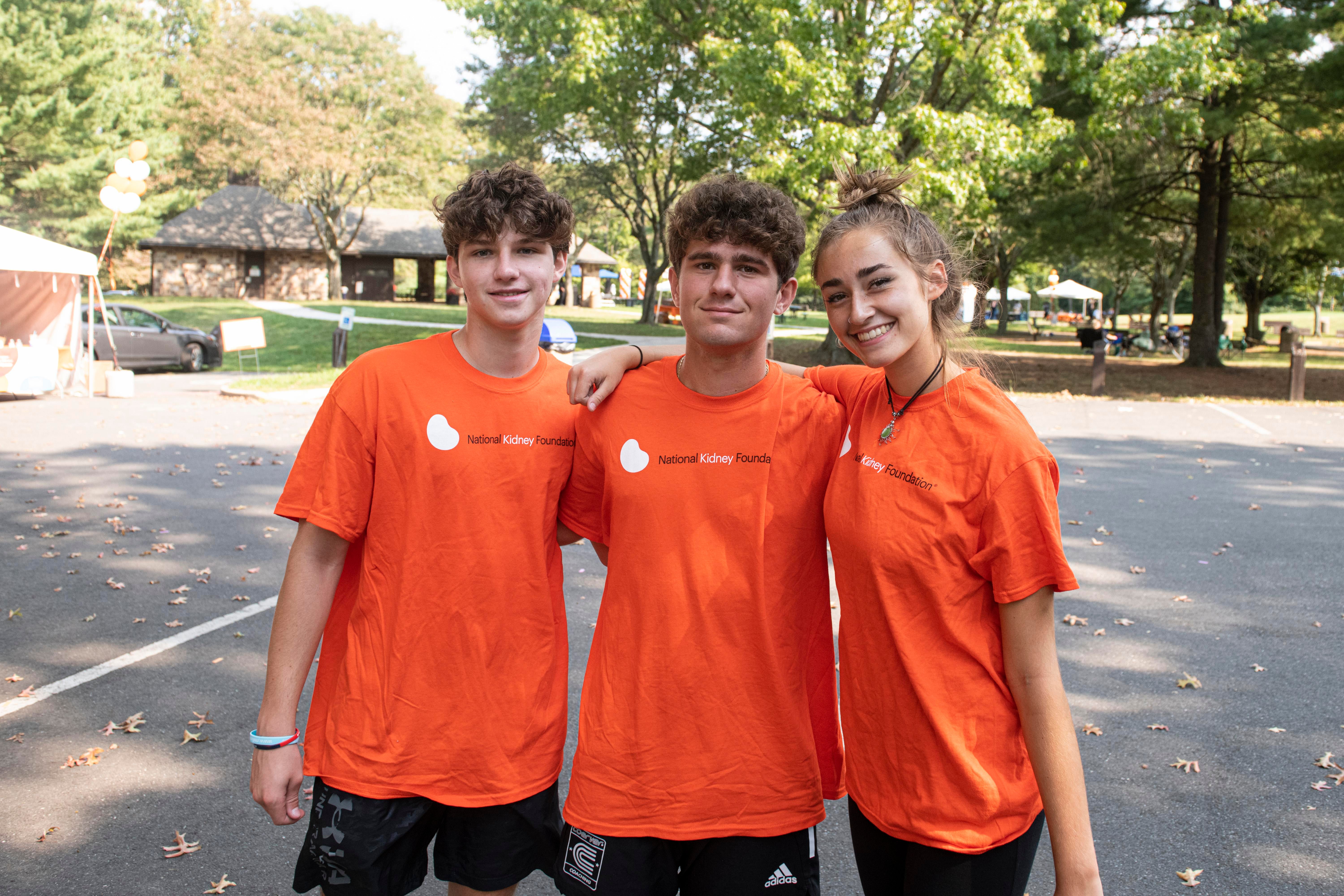
Volunteer for NKF

Want to make a difference in the kidney community all year long? Click the button below to fill out our volunteer interest form.

Bring Kidney Health Education to Your Community or Workplace

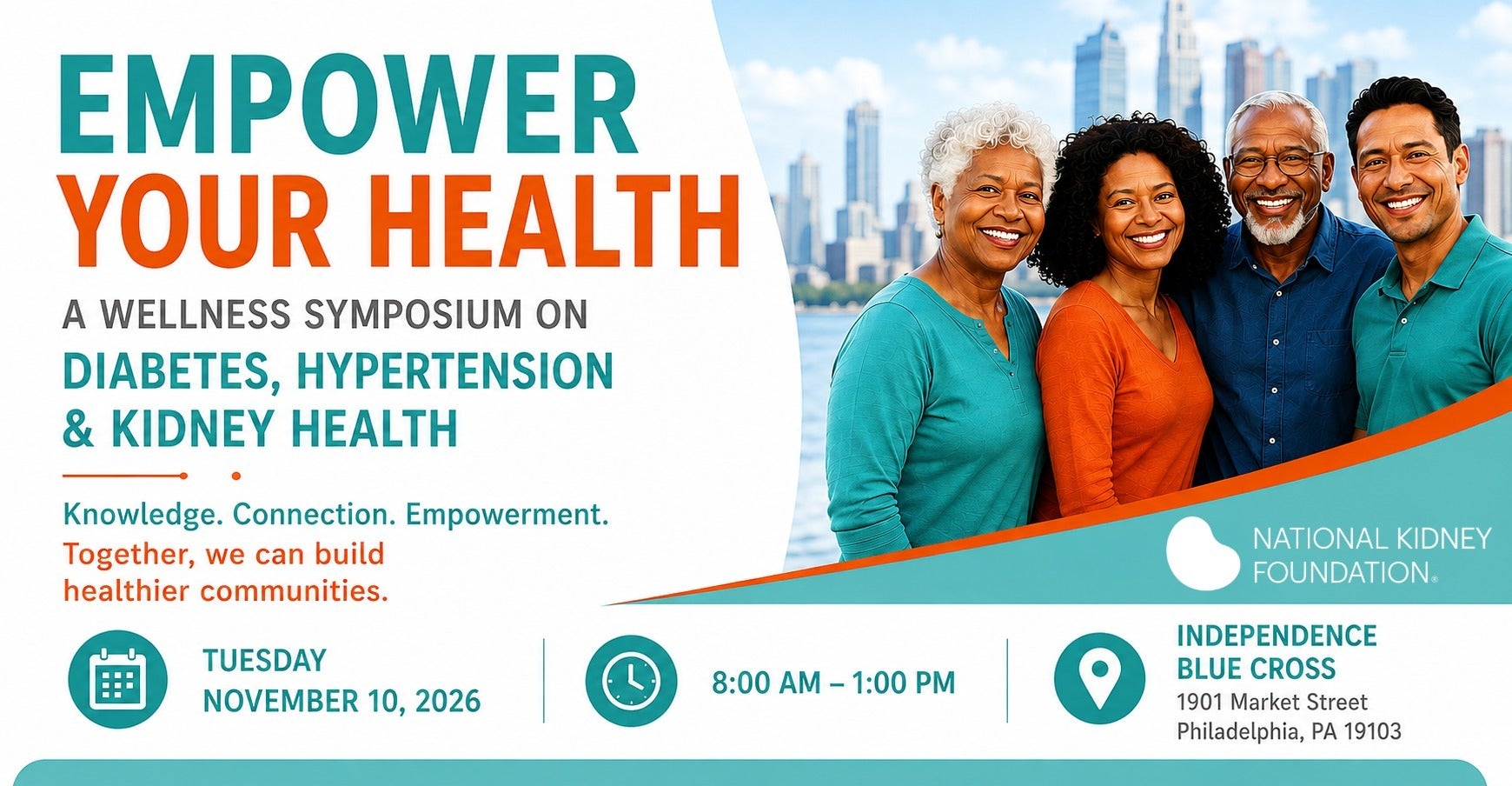
Is your community organization or company interested in hosting a kidney health education session? The National Kidney Foundation offers free programs tailored for community groups, faith-based organizations, and workplaces. Workshops can cover topics such as:
  • Understanding kidney health and risk factors
  • The link between diabetes, high blood pressure, and kidney disease
  • Nutrition and lifestyle tips for kidney wellness
  • Early detection and prevention strategies
  • Resources and support available through NKF
 
Let us know your interest by contacting michelle.foster@kidney.org . Together, we can empower your community with life-saving kidney health information.

PANJ’s Featured Kidney Story

Our community member Juliette Sampson recently represented the National Kidney Foundation (NKF) on a national stage, joining NKF leadership to ring the NASDAQ Closing Bell in celebration of the Foundation’s 75th anniversary. This powerful moment highlighted the urgency of kidney disease awareness and the real families behind the mission.

Juliette’s advocacy is deeply personal. Her daughter, Andrea, was diagnosed at a young age with a rare kidney disease that ultimately led to kidney failure as a teenager. Andrea received her first transplant from her father, giving her a second chance at life. Years later, when that kidney began to fail, Juliette stepped forward to become a living donor — turning a family’s struggle into a story of strength, love, and hope.

Despite multiple transplants and ongoing health challenges, Andrea continues to live fully and inspire others through her resilience. Juliette’s leadership and advocacy help ensure that stories like Andrea’s are seen, heard, and supported — from local communities to Times Square.

Professional Education

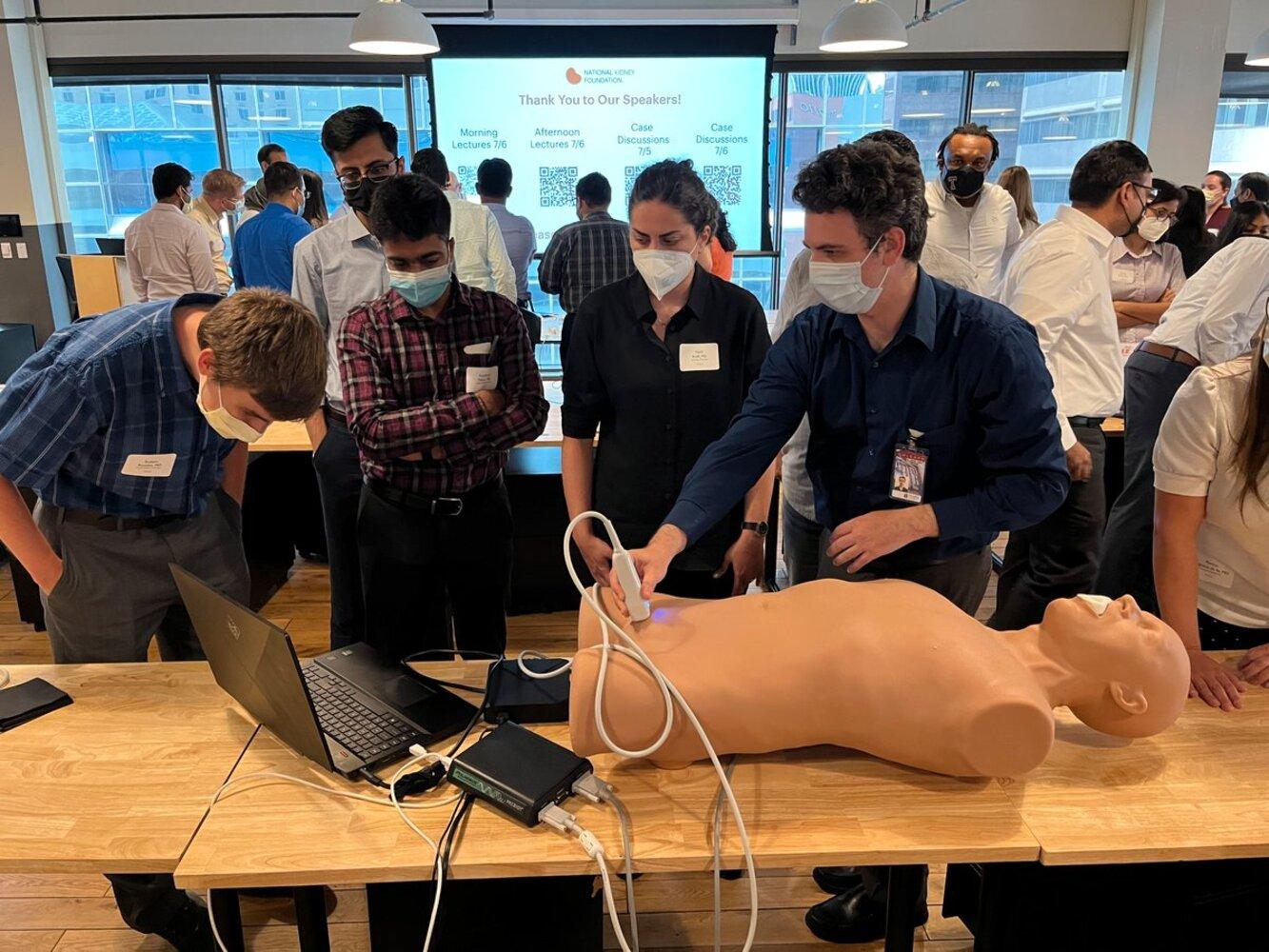
A group of medial professionals learning

18th Annual Mid-Atlantic Kidney Boot Camp

Save the date for July 2-3, 2025 for our two-day, non-CME symposium is designed to provide new fellows at Mid-Atlantic training programs the background they need to start their fellowship and gain an immediate understanding of the disease states they are likely to encounter in nephrology.
 

A graphic with a kidney and renal roundtable title

Renal Roundtable Programs

A Renal Roundtable is a professional education program featuring a presentation by leader(s) in the medical field and an opportunity for questions and networking. Renal Roundtables are free, non-accredited programs intended for healthcare professionals, specifically physicians and advanced practitioners.

 

A group of physicians at a MAB Meeting

Join Our Medical Advisory Board

Local Medical Advisory Boards (MAB) are made up of physicians and other health professionals to guide the local NKF’s patient, professional, and public education programs.  The MAB is an integral part of the NKF, serving to providing medical oversight, support, and volunteer services to the community. 

Interested in getting involved? For more information contact:

Eastern Pennsylvania
Marielle.VanThuyne@Kidney.org

New Jersey
Michelle.foster@kidney.org

Resources for Patients

Patient Webinar: Living Well with CKD

Thank you for joining us on World Kidney Day, for our patient webinar. This program, was lead by physicians, reviewed what chronic kidney disease is, and ways to optimize your health.

Living Well on Dialysis Webinar

Thank you to everyone who joined us to review what ESKD is, how to manage your CKD and optimize your health while on dialysis, and also review nutritional guidelines for those with CKD/ ESKD.

Stay tuned for more exciting patient webinars!

Webinars for Patients

Living Well with Chronic Kidney Disease is a series of webinars designed to empower and educate patients of all levels of CKD, from early stages to those on dialysis or awaiting transplantation and their caregivers. If you missed a live webinar, view past recordings by clicking below.


Stay tuned for new content announcements!

Pennsylvania Transportation Program

Pennsylvania residents who meet eligibility requirements are reimbursed for a portion of the transportation costs associated with traveling to and from dialysis treatment three times a week. This program is run in collaboration with, and within the guidelines of, the Pennsylvania State Renal Disease Program.


Please contact your social worker at your dialysis clinic or click the button below for an application.

Have questions about kidney disease? We can help!

Our Patient Information Help Line, NKF Cares, offers support for people affected by kidney disease, organ donation or transplantation. It's designed just for patients, family members and care partners. Speak with a trained specialist who will answer your questions and listen to your concerns. This is available in English and Spanish Monday–Friday, 9am–7pm ET!

¿Tiene preguntas sobre la enfermedad renal? ¡Podemos ayudar!

Nuestra línea de ayuda de información NKF Cares, ofrece apoyo a las personas afectadas por enfermedades renales, donación o trasplante de órganos. Está diseñado solo para pacientes, familiares y sus cuidadores. Hable con un especialista que responderá sus preguntas y escuchará sus inquietudes. Esto está disponible en inglés y español de lunes a viernes de 9am a 7pm, hora del este.
Follow us on Social Media @nkfpanj!

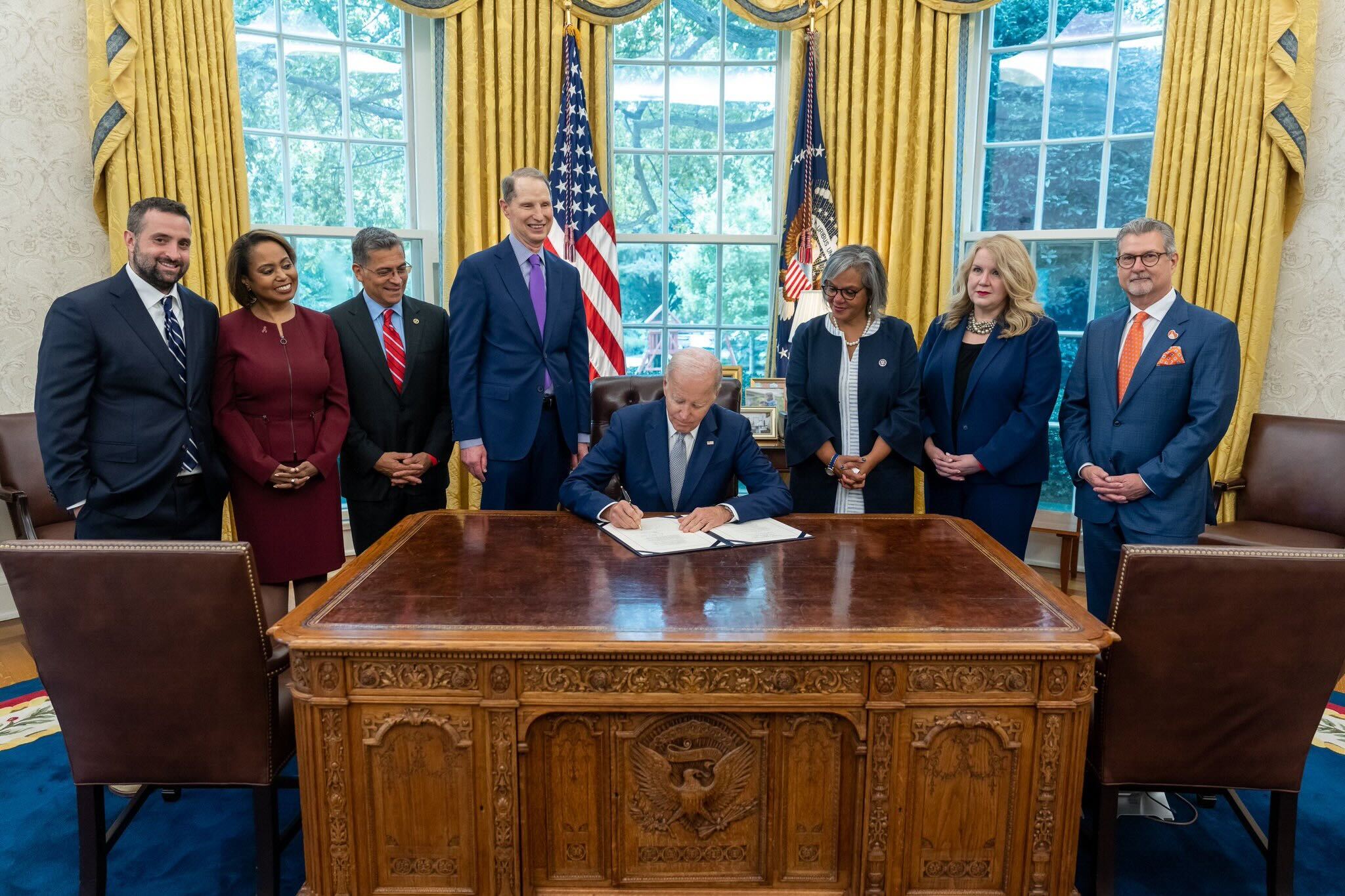
The Securing the U.S. Organ Procurement and Transplantation Network Act

The Securing U.S. Organ Procurement and Transplantation Network (OPTN) Act was signed into law! This Act aims to improve the transplant system in the United States. It focuses on promoting innovation, transparency, and accountability to enhance equity and access to transplantation for all Americans. The Act also seeks to modernize donor-recipient matching technology, create an efficient system for maximum organ transplantation, and save lives by strengthening governance, data collection, reporting, and patient decision-making. It addresses disparities in kidney transplantation, particularly in communities of color, where patients often face longer wait times and reduced access to transplant options due to various barriers, including awareness and distrust in the medical system.

If our scheduled fundraisers aren’t what you’re looking for, then create your own event to raise funds and hope with Team Kidney.

From celebrating transplant anniversaries, honoring a loved one, to bake sales and bowling tournaments, to pushing yourself with a 10K or E-Sports — the fundraising possibilities are endless.

For questions, contact our Development Manager, Wendy Benedict.

In 2021 we passed the Living Donor Protection Act in the state of New Jersey and Pennsylvania. This bill will ensure that life, long-term care and disability insurers will not discriminate against living organ donors.

Thank you to all the volunteers, advocates, living donors and their families who made this happen!

Donate to Fight Against Kidney Disease

You can play a part in supporting kidney patients to lead happy and healthy lives.
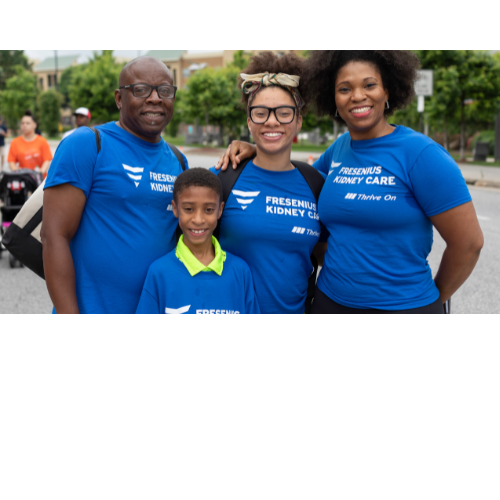
A dialysis clinic sponsor at a kidney walk

Help support the National Kidney Foundation with your company. Your team can participate in many different ways, such as supporting a kidney walk, participating in professional programs, or organizing a workplace giving campaign. Click the link above for more information.
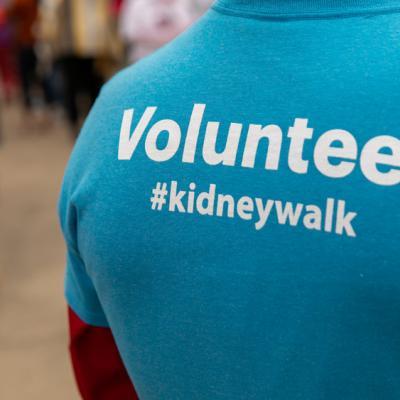
Volunteer Shirt

Your skills and interests can help build healthier communities, spread the word, and create real change.

Car on tow truck for donation

Donate your old car, boat or tractor to help improve the lives of the millions of Americans affected by kidney disease. Call 800.488.2277 or click the link to start.

Local Office

1900 Market St.
Suite 800
Philadelphia, PA 19103
United States

Email: nkfpanj@kidney.org
Fax: 215.923.2199
Phone: 215.923.8611
Toll Free: 800.697.7007

Upcoming Events