August 20, 2026
Article By: Jennifer Cramer-Miller, Board Chair for NKF Serving Minnesota
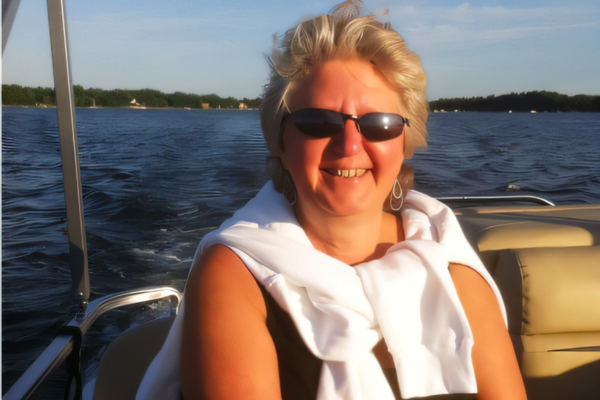
Photo Credit: HCM Wall of Heroes
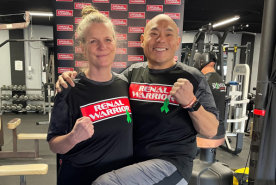
Eugenia Steffens has dedicated nearly four decades to kidney transplantation and organ donation. Her long-standing nursing career has touched the lives of countless transplant patients and living donors. Then, in 2011, she became a kidney donor herself. Today, she serves as the Senior Administrator for the Transplant and Kidney Service Line at Hennepin Healthcare in Minnesota, continuing her lifelong mission to improve kidney care.
From Nursing Home to Transplant Floor
Eugenia's journey in healthcare began in 1985 when she moved to Minnesota and started working in a nursing home.
Soon after, the University of Minnesota offered her a job on the transplant floor. Though unfamiliar with transplantation at the time, she was quickly fascinated by the life-changing nature of transplant surgeries.
"I soaked up all there was to see and learn about the organ systems of the body," Eugenia said.
In the decades that have followed, her education has never ended.
"The advancements in transplant are always evolving. We're always learning. It's a unique surgery specialty," Eugenia explained, "because it's one of the few surgeries where you wake up feeling better."
Becoming a Living Kidney Donor Through a Paired Exchange
In 2011, Eugenia's professional expertise crossed over into personal action. She selflessly volunteered to become a kidney donor.
Years earlier, Eugenia's niece had kidney failure. Motivated to help her loved one, Eugenia completed an evaluation. Unfortunately, the transplant clinic deemed her HLA proteins incompatible with her niece's.
HLA matching helps doctors see how well a donor organ matches a recipient. The more similar the HLA proteins are, the lower the chance of the body rejecting the organ. Better matches often lead to longer-lasting transplants.
Fast forward ten years. Eugenia's daughter left home for college. Her high school son was graduating soon. That's when she decided to pursue living donation again.
“I told my husband I wanted to be a non-directed donor," Eugenia explained. "These were the early days of a local paired exchange. Hennepin, University of Minnesota, Mayo Clinic, Abbott, and some hospitals in the Dakotas were involved."
A paired kidney exchange is like a kidney "swap" between two or more pairs of people.
Eugenia's donation set off a two-way transplant chain, allowing her niece and a stranger to get a second chance at life.
NKF is here for you, whether you are looking for a living donor or want to become one. Watch videos by patients and living donors to learn more.
How Kidney Transplantation Has Improved Over Time
Thanks to her years as a living donor coordinator, Eugenia has also seen remarkable improvements in the patient side of transplantation.
- Hospital stays have dropped from several weeks to a few days.
- Immunosuppressant drugs have become safer and more effective, helping to protect transplanted kidneys from rejection.
- Antiviral treatments have reduced the risk of infections that once posed serious threats to transplant recipients.
- HLA antigen matching and immunology breakthroughs have made it easier to match donors and recipients more precisely.
Eugenia recalled a key milestone in the field: "Cyclosporine, an immunosuppressant drug, became available in the mid-1980s. Before that, we mainly used prednisone and induction medications, which are harder on the body."
Looking Ahead: Hope in Xenotransplantation
With decades of progress behind her, Eugenia is optimistic about the future of transplant care.
She's especially hopeful about xenotransplantation. Xenotransplantation uses pig organs for transplant–in this case, kidneys–to address the organ shortage.
"This kind of innovation could offer real solutions for our aging population and those who wait years for a transplant," Eugenia said.
Honoring a Life Dedicated to Kidney Health
Eugenia Steffens has shaped the lives of patients, families, and medical professionals throughout her career. Her choice to become a donor underscores her belief in the power of kidney donation.
"I love knowing I can be part of someone's rough day and make it better," she said. "It's an honor to be part of the gift of life."
Want to make a difference, like Eugenia? Learn how to take action with NKF.