August 14, 2026
Article By: NKF Staff
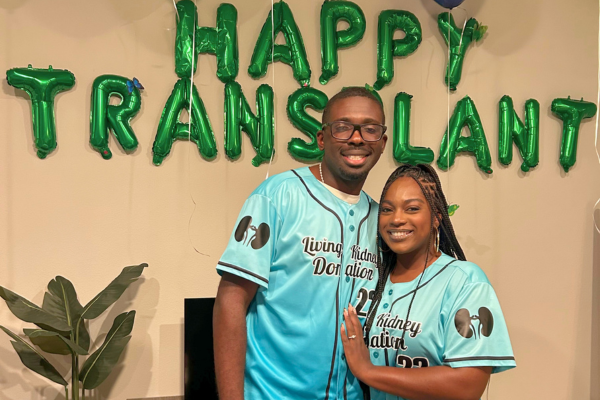
Just weeks after Kamri and Lotanna got engaged in late 2023, their world was turned upside down when Kamri was diagnosed with kidney disease.
Ten Missed Calls
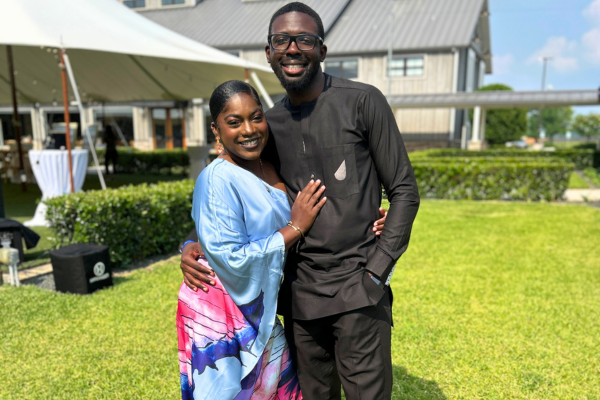
The Sunday of Kamri’s diagnosis started like any other for her and Lotanna. The only difference was that Kamri wasn’t feeling well.
“She had a headache, so she stayed home while I went to church,” Lotanna said. “When I got out of service, I had ten missed calls and messages telling me to get to the emergency room.”
Kamri had gone to urgent care, hoping antibiotics would help what she thought was an infection.
“They took my blood work and told me I wouldn’t be getting antibiotics or going home,” she said. “My blood pressure was through the roof, my kidney numbers were low, and my blood sugar was way off target.”
At the hospital, a nephrologist explained that Kamri’s kidney function was at 32% or stage 3b chronic kidney disease (CKD).
“I was diagnosed with diabetes at 11. I knew there could be complications, but I had it under control for the longest time,” she said. “This was the start of my kidneys failing.”
After Kamri stabilized, she was sent home with instructions to follow up with a nephrologist.
“My nephrologist said I was in an okay place,” she said. “I continued with check-ups and followed their recommendations as I got ready for our wedding.”
Join the NKF Blog Newsletter
Get Support, Delivered Monthly
Get monthly inspirational stories, practical insights, and expert advice to manage your kidney health at any stage.
The Best Day During the Worst Time
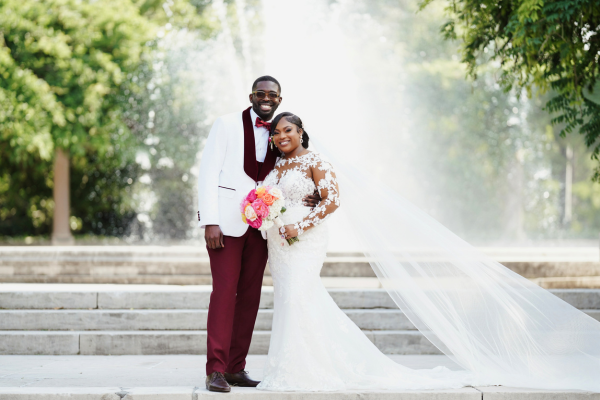
As the clock ticked closer to their dream 2024 wedding, Kamri’s kidney function continued to decline.
“My wedding was the best day of my life, but physically it was the worst I have ever felt,” she said. “I threw up all morning, my body was extremely swollen, and I couldn’t wear my wedding shoes because my feet didn’t fit in them.”
Fluid buildup, fatigue, and nausea are common in advanced kidney disease. For Kamri, this was the turning point.
“That was the moment I knew I needed the next step,” she said. “When we got home from the wedding, I told my husband I was ready to start dialysis. I physically could not keep going like that anymore.”
Dialysis, which removes waste and excess fluid from the blood when the kidneys can no longer do so, became a necessary part of Kamri’s routine by August 2024.
Understanding the Living Donation Process
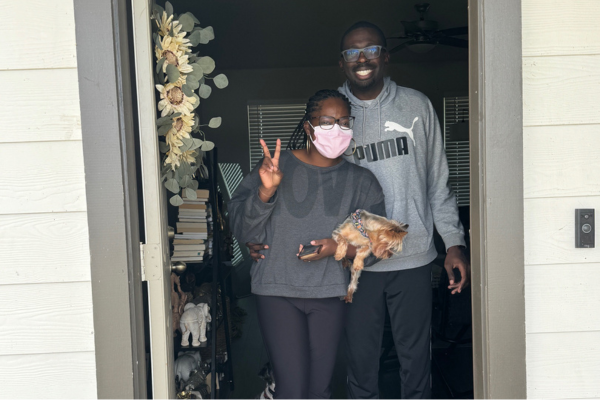
For Kamri, living donation wasn’t a new concept. Before her own diagnosis, she worked at two organ procurement organizations (OPOs), supporting donor and recipient families.
“That experience gave me a deeper understanding of how transplantation works,” Kamri said. “I already knew that it is generally safe for people deemed healthy enough to donate.”
So when it came time to consider her own transplant, Kamri already knew that she wanted to pursue living donation.
“Many of my loved ones quickly stepped forward to start the living kidney donor evaluation. But the number one person on that list was my husband,” she said. “He was the first to fill out the form.”
That’s because Lotanna takes his wedding vows seriously.
“For better or for worse,” he said. “ I would do whatever I could to help. I was there through the appointments, the dialysis, all of it. I was ready to donate my kidney.”
After testing, Lotanna was thrilled to learn he was a match.
“I would have done a paired donation if we weren’t a match. I just wanted her to have a better life, ” he said. “But I feel so blessed that I could donate–it meant everything.”
With that, the surgery was scheduled for September 2025.
“He Saved My Life”
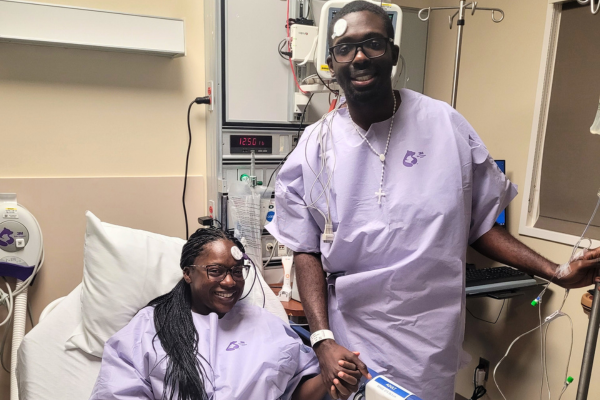
The day of the surgery was filled with nerves, excitement, and hope.
“We woke up really early and got to the hospital,” she said. “It was a little scary, but all of our family showed up to support us.”
Kamri and Lotanna were placed in rooms right next to each other. Both changed into hospital gowns, met with their doctors, and spent one more moment together.
“We don’t say ‘goodbye,’ we say ‘see you later,’” Kamri said. “That was our last moment together before surgery.”
When they finally saw each other after surgery, Kamri was stunned.
“They wheeled Lotanna into my room, and I just looked at him like…wow,” she said. “He saved my life.”
Both recovered well. Today, they are still happily married and excited for the future.
Now, Kamri tells everyone, “I gave him my heart. He gave me his kidney.”
Why Talking About Living Donation Matters
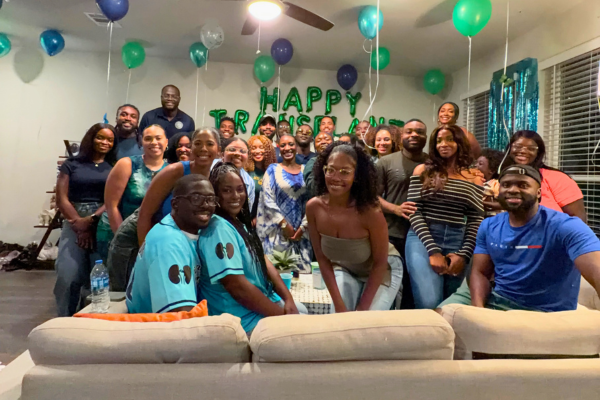
While the surgery is over, Kamri and Latonna’s kidney journey is just getting started.
“We need to continue sharing our story,” Kamri said. “We don’t talk about kidney disease and transplantation until we have to. That’s why these conversations feel so heavy.”
They’ve already seen the power of sharing their story.
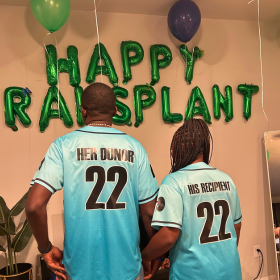
“We threw a pre-transplant party. It was a celebration with food and music,” Kamri said. “But we also spent a lot of time educating our family and friends about donation.”
Kamri and Latonna walked though common myths and encouraged people to ask questions, something both say doesn’t happen often enough.
“As a Nigerian, this isn’t something we really talk about,” Latonna said. “I didn’t know anyone in my family who had gone through a living donation.”
Kamri added that this hesitation shows up in many communities.
“The Black community is often one of those most in need of living donors,” she said. “But we tend also to be the most hesitant about it.”
When they opened up the conversation, they saw how much misinformation exists. Some were surprised that donors can go back to living normal lives. Others thought that a doctor wouldn’t try as hard to save an organ donor.
“Even I thought that at first,” Latonna said. “But that’s not true. Their job is always to save your life first and foremost.”
For both of them, the takeaway is simple:
“We have to get more comfortable talking about this,” Kamri said. “These conversations save lives.”
Considering living donation? Get matched with a trained NKF Peer mentor.