March 24, 2026
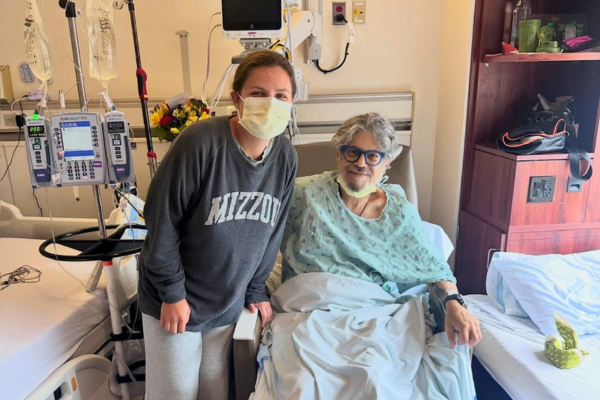
For years, Bernard (Bernie) faced complex health problems that left doctors searching for answers. In his early 40s, he had surgery for pancreatic cancer, but the symptoms didn’t go away. It took time, but they eventually discovered the cause: IgG4, a rare autoimmune condition that also led to kidney failure.
But in 2025, a living donor gave him a second chance at life.
Diagnosed with IgG4
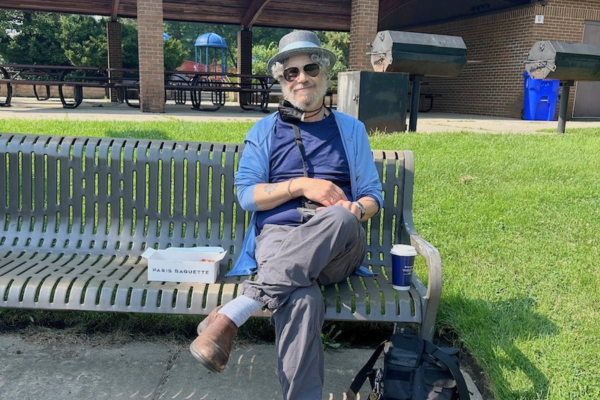
Bernie’s medical team had been searching for the cause of his kidney issues for years. In 2023, they finally diagnosed him.
“I have IgG4, a rare form of IgA Nephropathy that causes my immune system to attack my body,” Bernie said. “They started me on high-dose steroids to fight it.”
The steroids helped Bernie’s kidneys, but they were also difficult on his body.
“In 2024, I had a stroke that affected my speech. I was in the hospital for a week before getting discharged,” he said. “Soon after, I had an appointment with my doctor, who was worried I had leukemia.”
The good news was Bernie didn’t have leukemia. The bad news was that his kidneys failed, and the kidney transplant waitlist in his area was around 5 to 7 years.
“I was told that I would likely not survive the wait for a transplant,” he said. “Both health-wise and age-wise.”
Since the transplant list wasn’t realistic, he and his then-girlfriend, now wife, Sarah, decided to try something different.
Turning a Life-Saving Need Into a “Marketing Campaign”
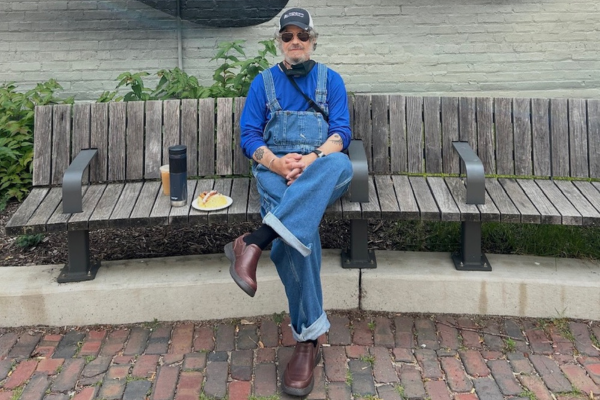
To find a living donor, Bernie had to do something that felt deeply uncomfortable at first–ask for help. But once he worked through that hurdle, Bernie and Sarah treated the search like a full-scale outreach effort.
They contacted friends, coworkers, music community members, and professional networks.
“We created business cards with a QR linking to donation information,” Bernie said. “It amazed me how many people responded.”
Several people stepped forward to be tested. One even matched, but couldn’t donate due to medical issues.
“I went to my employer and asked if I could send a company-wide email sharing my kidney story,” Bernie said. “They allowed it. That’s how Hope came into my life.”
Join the NKF Blog Newsletter
Get Support, Delivered Monthly
Get monthly inspirational stories, practical insights, and expert advice to manage your kidney health at any stage.
A Donor Waiting for the Right Moment
Hundreds of miles away, Hope received the company-wide email.
“I’d been thinking about becoming a living kidney donor for a long time,” she said. “Nearly a decade ago, I moved in with my aunt during a summer internship. She worked in health literacy around dialysis.”
That experience stayed with Hope.
“I learned a lot about dialysis and the impact it can have on a person’s life,” Hope said. “I also learned how donating is generally safe. I’m healthy, and I don’t need both of my kidneys.”
She discussed the idea with her family and came to a decision. If Hope ever encountered someone in need and she was in a stable place in life, she would donate.
“Bernie just so happened to be that person, " she said. “I passed the preliminary testing and matched him. I’m so glad I did.”
From Strangers to Lifelong Friends
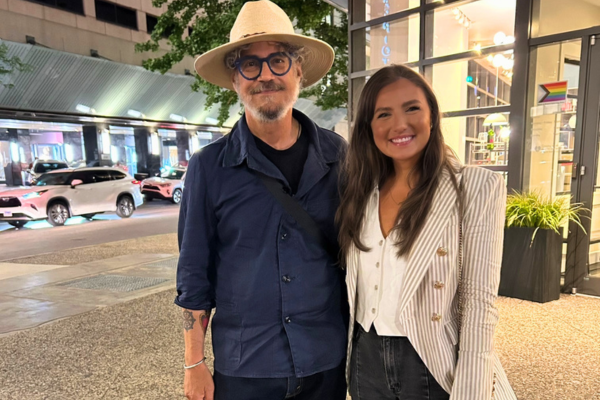
The first time the two met was when Hope traveled to Bernie’s home city for the final donor evaluation.
“We had dinner, and it was a really wonderful experience,” Bernie said. “It’s incredible to me that Hope would do this.”
After Hope passed the evaluation, the surgery was scheduled for July 2025.
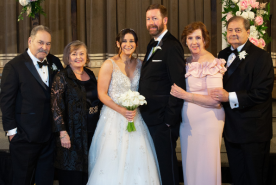
“A week before it, Sarah and I got married,” Bernie said. “It felt right for this next phase of my life.”
While the transplant was underway, something else special happened.
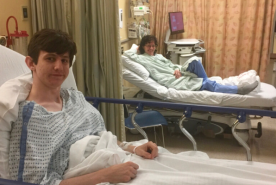
“Our families met each other in the waiting room,” Bernie said. “My son drove in, my sister came, Hope’s mom and sister were there—everyone connected.”
What started as a medical connection quickly bloomed into a beautiful friendship.
“People think we’re a very unlikely pair,” Hope said. “But I can’t imagine having gone through this with anybody else.”
Recovery: Two Different Experiences
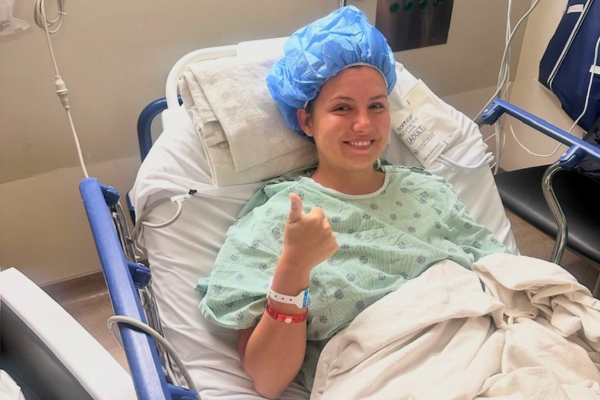
After surgery, Hope and Bernie experienced recovery from very different perspectives.
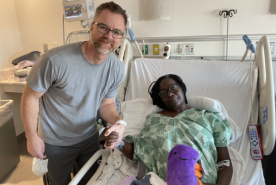
“I was so incredibly sick that getting a new kidney made me feel immediately better,” Bernie said.
Hope’s recovery was a little more difficult.
“I struggled the first couple of weeks,” she said. “Donors come into surgery very healthy. It can take time to adjust.”
But Hope soon returned to normal life.
“The most surprising thing is I don’t feel any different,” Hope said. “I imagined I’d somehow sense the absence of an organ, but I don’t.”
Today, her biggest lifestyle change is minor.
“Instead of three glasses of wine a week, I have one,” Hope laughed. “And it’s probably better that way anyway.”
A New Outlook and a New Mission
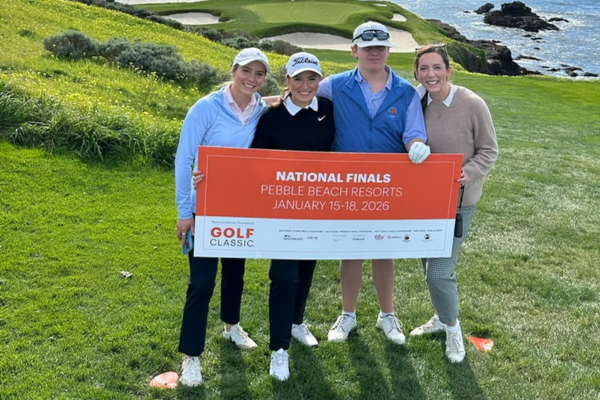
After the transplant, Hope and Bernie found themselves thinking about how to give back.
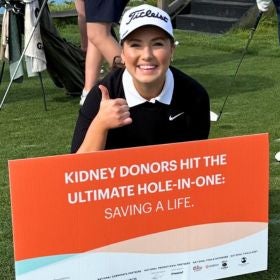
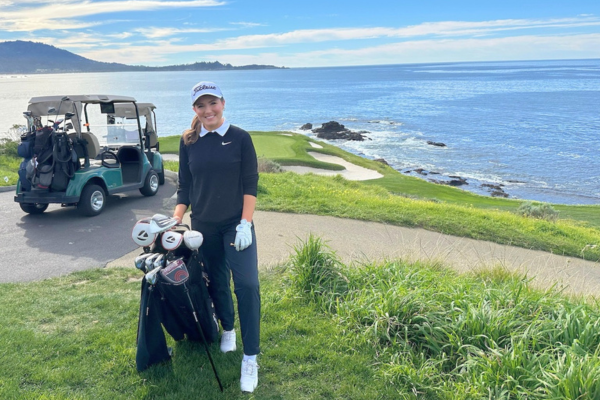
“I was on a call with the National Kidney Foundation (NKF) to learn more about the programs and how to get involved,” Hope said. “In a follow-up email, I mentioned how much I loved NKF’s Golf Classic fundraiser in Pebble Beach, CA.”
Soon after, she received an unexpected invitation.
“They had an open spot and invited me to participate,” Hope said. “I jumped at the chance because Pebble Beach is very special to my family and me.”
Hope’s father, who’d passed away in 2020, was an avid golfer, and playing in Pebble Beach was a bucket list item for him.
“My family accompanied me to Pebble Beach. I played, and we spread some of my dad’s ashes on the seventh hole. It was very sentimental,” said Hope. “Next for me is helping with NKF’s advocacy initiatives."
For Bernie, the transplant sparked a desire to help others navigate the challenges he once faced.
He plans to participate in local Kidney Walks and continues encouraging others who are searching for donors, something he knows firsthand can be one of the hardest steps.
“You don’t have to do anything to earn that quality of life. You deserve it just by being alive,” said Bernie. “I plan to help more people understand that.”
Both hope that sharing their story encourages others to take action in whatever way they can.
“We all have something we can give,” Bernie said. “It might be donating a kidney, but it could also be donating money, volunteering, participating in a Kidney Walk, or just helping someone in another part of life.”
Already, they’ve seen the ripple effect.
“People have told us they felt inspired after hearing our story,” Hope said. “Some went to donate blood. Others volunteered at food banks. Those are wonderful outcomes too.”
That’s exactly why they plan to keep sharing their journey.
“We see that response of people wanting to take positive action,” Bernie said. “And that makes it worth telling.”
Has NKF helped you on your kidney journey? We’d love to hear from you! Share your NKF story here.