May 12, 2026
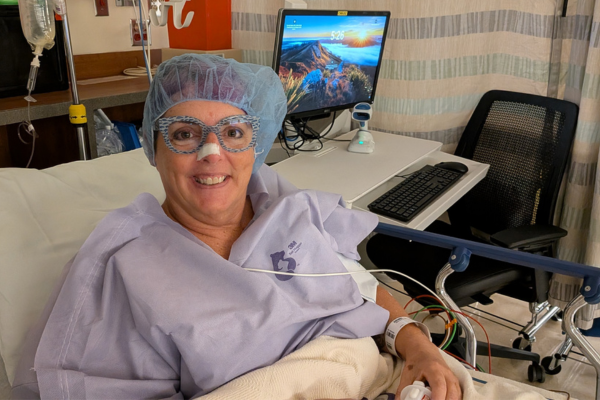
From the moment she got her driver’s license, Karen Burke chose to be an organ donor. She checked the box and felt comforted knowing that if anything happened to her, her organs might save someone else’s life.
But after hearing a mother and daughter thank a kidney donor who saved her life on a podcast, Karen decided she could do more.
Rethinking Age and Living Kidney Donation
Karen first heard Jennifer Cramer-Miller's living donor story on Kelly Corrigan's Thanks for Being Here podcast. Karen listened to the letter Jennifer's daughter wrote to the living donor who saved her mom's life and was “overwhelmed with certainty.”
“I knew I was supposed to pursue anonymous or non-directed kidney donation,” she said. “I was close to 60 at the time. I thought I was too old to donate a kidney.”
But she figured it wouldn’t hurt to check.
“I told my husband I was going to look into being a kidney donor,” Karen said. “We still laugh about this because he just said okay and went about his day.”
So, Karen went to the National Kidney Foundation’s website and started the pre-screening process, which is just one way potential donors can begin their journey.
“I went to NKF and filled out the National Kidney Registry form,” she said. “Within minutes, I got another e-mail with an additional form to fill out.”
A few hours later, Karen had an appointment to have labs drawn the next day.
Starting the Living Donor Process
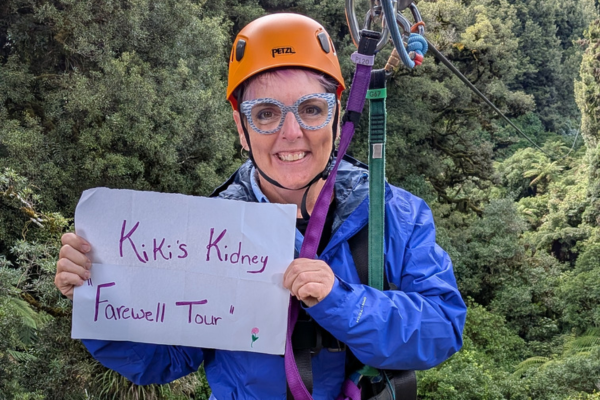
Since things moved more quickly than Karen anticipated, she decided to have a more serious conversation with her husband.
“I didn’t know how far I would be able to go in the living kidney donor evaluation,” she said. “But regardless, it would affect him. I wanted us to be on the same page.”
He thought about it for a moment before encouraging Karen to go for it.
“I waited to tell our children about my decision until my labs came back and I moved to the next step,” she said. “They were concerned at first about safety and then about a possible future where a family member needed a kidney.”
Karen explained that most kidney donors go on to live normal lives. She also shared information about NKR’s Family Voucher program, which allows living donors to designate loved ones for a priority living donor transplant from NKR’s pool of donor. The voucher can be used for one of the family members listed.
“Once I was deemed a good donor candidate, we had a lot of conversations as a family to decide who to list on the voucher program,” Karen said. “In the end, we’re happy with the decisions we made.”
Join the NKF Blog Newsletter
Get Support, Delivered Monthly
Get monthly inspirational stories, practical insights, and expert advice to manage your kidney health at any stage.
From Match to Surgery
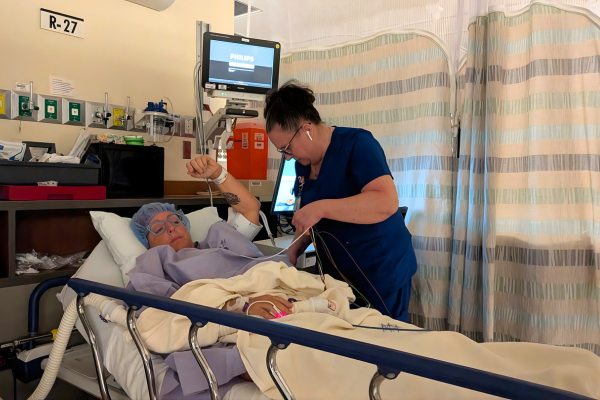
Since the evaluation process happened so quickly, Karen assumed the transplant would too.
“It took them a while to find me a match,” she said. “After five weeks, they did, and the surgery was scheduled.”
But when Karen asked for information about the recipient, she was disappointed to learn it was a person in their late sixties.
“I had this idea of saving a child or a young person,” she said. “Then I spoke with a friend in their late 60s who told me how grateful her children would have been if she needed a kidney.”
This reminded Karen that her commitment wasn’t to give a kidney to a specific person.
“My commitment was to give my kidney,” she said. “My job was to walk through the steps. Whatever came next with the kidney wasn’t my responsibility.”
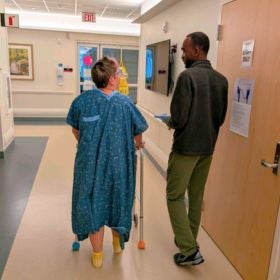
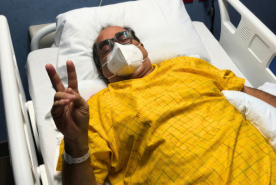
With that, Karen moved forward with the surgery and was shocked at how easy it was.
“I went home the next day, but I did have some struggles with the pain,” she said. “ I had my medications adjusted, and that was a game-changer.”
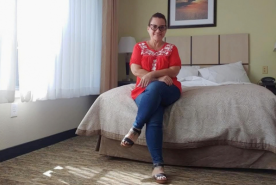
Within four weeks, Karen was back to her everyday life and has felt amazing since.
Speaking Out About Living Kidney Donation
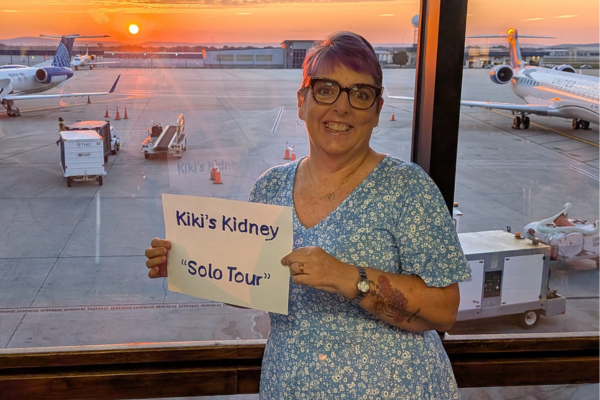
From the very beginning of her journey, Karen knew one thing for certain.
“If I was going to move forward with living donation, I needed to understand it,” she said. “And I wanted to help others do the same.
This desire led Karen to create @kikiskidney, an Instagram account to document her experience. As she opened up, others did too.
“The number of people who have messaged me about their own kidney journeys has been astounding,” Karen said. “So many are affected by kidney disease, but it, along with living kidney donation, is hardly ever talked about.”
She’s also since communicated with her recipient.
“He’s 70 now, and although his recovery has been tough, he’s been able to spend time with his children and grandchildren and enjoy the holidays without being connected to a machine,” Karen said. “It means everything to me.”
That’s why Karen will continue to share education and resources. Because if one story inspired her to donate, she knows another story could inspire someone else to take that same step and ultimately help save a life.
Want to learn more from someone who actually donated a kidney? Get matched with an NKF living donor peer mentor.